Emergency Roof Repair: Residential vs Commercial Services

Urgent Roof Fixes: Homes vs. Businesses in Millersville, MD
A sudden roof cave-in or a rapidly spreading leak can quickly turn any property into a major headache, and understanding the differences between emergency services for homes and businesses can save you a fortune in restoration expenses. Homeowners and business owners in Millersville, MD need swift assessments and customized solutions when hail, wind, or fallen trees compromise their roof’s integrity. This guide breaks down what constitutes a roofing emergency, explores common issues for both residential and commercial properties, compares materials and repair methods, outlines differences in scope and scale, examines cost and insurance factors, and highlights why Exquisite Roofing is always ready with 24/7 licensed and insured expertise. By grasping these distinctions, property owners gain clarity on response plans, safety measures, and budget expectations, ensuring quick action when every moment counts.
What Exactly Is an Emergency Roof Repair for Homes and Businesses?
An emergency roof repair is a critical, sudden roof failure that immediately jeopardizes your property, safety, or operations. It happens when severe weather, structural flaws, or accidental damage create leaks, pose collapse risks, or expose interiors, demanding professional attention within hours. For instance, a compromised roof membrane in a warehouse can lead to pooling rainwater above sensitive equipment, risking electrical malfunctions and production halts. Clearly defining these emergencies ensures Exquisite Roofing dispatches certified teams with the right equipment, materials, and safety protocols to protect both homes and businesses.
What Are the Tell-Tale Signs of a Roof Emergency?

Before the pros even arrive, these visible clues often signal a roofing emergency:
- Drooping roof deck sections, indicating structural weakness under water pressure.
- Active leaks dripping into your living or working space, showing a breach in the membrane.
- Missing or dislodged shingles and flashing after strong winds or hail.
- Interior water stains or bubbling paint where moisture has started to seep in.
- Accumulated debris or standing water on flat commercial roofs.
Each of these warning signs demands immediate action to prevent further interior damage, ensure occupant safety, and avoid secondary problems like mold or electrical hazards.
Why Is Fixing Your Roof Right Away Crucial to Stop More Damage?
Immediate intervention halts the progression of damage by stopping water intrusion, reinforcing weakened structures, and securing exposed areas with temporary coverings or patches. Quick action prevents mold growth, rot, and saturated insulation, while also minimizing the expansion of cracks and leaks. For example, quickly tarping a storm-damaged asphalt shingle roof on a house protects ceiling joists from swelling and mold within hours. Acting fast reduces the overall repair scope and cost, preserves interior finishes, and safeguards your property’s value from escalating damage.
What Are the Most Common Urgent Roof Issues for Homes?
Residential roofing emergencies often arise from weather exposure, aging materials, and unexpected impacts on smaller roof areas that quickly escalate.
Which Home Roof Problems Need Immediate Attention?
Residential roofs can experience several urgent failure types:
- Lost Shingles – Wind or hail damage leaves the underlying decking exposed.
- Compromised Flashing – Damaged metal edges around chimneys and vents create concentrated leak points.
- Tree Limb Damage – Fallen branches can crack shingles or puncture the underlayment.
- Blocked Gutters – Overflowing water can damage fascia and soffit, leading to rot.
- Ice Dams – Winter freeze-thaw cycles trap melting water beneath shingles.
Recognizing these critical issues ensures homeowners call for professional help before interior damage worsens.
How Does the Emergency Roof Repair Process Work for Homes?
Emergency service for homes starts with a rapid visual and drone inspection to document damage and potential hazards. Our technicians then apply temporary tarps or seal leaks with asphalt cement within hours, followed by scheduling permanent repairs using matching shingles, underlayment, and flashing. This two-step approach—stabilize then restore—prevents further water entry while we arrange for materials. Final quality checks ensure watertight seals, secure fasteners, and proper ventilation to restore the roof’s long-term performance.
What Safety Tips Should Homeowners Follow During a Roof Emergency?
Homeowners should take these precautions until professionals arrive:
- Stay off a wet or damaged roof to prevent falls.
- Shut off attic or rooftop electrical circuits if water is near wiring.
- Move valuables and furniture away from leak areas to protect interiors.
- Keep children and pets clear of ladders and tarped sections.
- Inform everyone in the household about potential secondary risks like mold or slippery surfaces.
Following these guidelines minimizes personal risk and helps the professional repair process run more smoothly.
What Home Roof Materials Are Most Prone to Emergencies?
Residential roofs use various coverings, each with unique emergency vulnerabilities:
| Roof Material | Vulnerability | Common Failure Mode |
|---|---|---|
| Asphalt Shingles | Degradation from UV rays and wind uplift | Cracked, curled, or missing shingles |
| Wood Shakes | Moisture absorption and rot | Splitting and mold development |
| Metal Panels | Corrosion and separation at seams | Leaks at fasteners or along seams |
| Tile Roofs | Impact damage and underlayment tears | Broken tiles and water penetration |
| Slate Roofing | Brittle fractures from heavy impacts | Cracked or dislodged slates |
Asphalt shingle roofs are common on homes in Millersville, making wind and hail damage the most frequent reasons for emergency calls in the area.
What Are the Unique Challenges of Commercial Emergency Roof Repair Services?
Emergency interventions for commercial properties involve large, flat, or low-slope roof systems over occupied or active buildings, requiring specialized planning and equipment.
What Common Commercial Roof Emergencies Need Immediate Repair?
Commercial roofing emergencies often involve:
- Membrane Punctures from rooftop foot traffic or falling equipment.
- Ponding Water that creates weak spots and stresses the structure.
- Seam Separation due to thermal expansion or poor adhesion.
- HVAC Unit Leaks where flashing around large mechanical curbs fails.
- Sunlight Penetration through blistered or bubbled single-ply membranes.
How Is the Commercial Emergency Roof Repair Process Different?
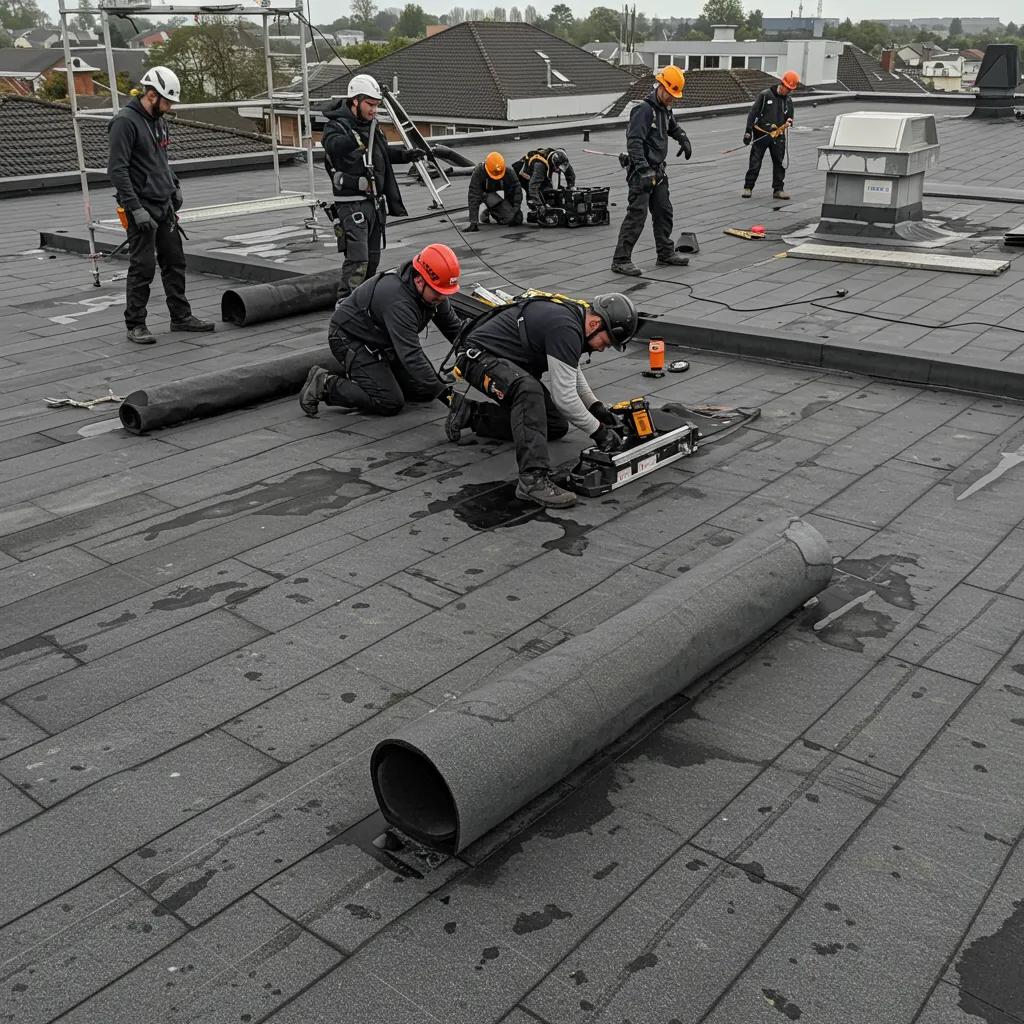
Commercial response teams establish safety zones, erect scaffolding, or install perimeter barriers before starting repairs. They use infrared scans to pinpoint membrane breaches, apply cold adhesives or hot-air welding for thermoplastic seams, and conduct water tests on areas with standing water. This process balances speed with minimizing disruption to ongoing operations, often working during off-hours to maintain productivity.
What Commercial Roof Types Affect Emergency Repair Approaches?
Different commercial roofing systems require specific repair strategies:
| Roof System | Characteristic | Emergency Repair Method |
|---|---|---|
| TPO Membrane | Heat-welded seams | Hot-air welded patch repairs |
| EPDM Rubber | Large membrane sheets | Adhesive seam reinforcement |
| Built-Up Roof | Multiple layers of bitumen and gravel | Torch-applied or adhesive patches |
| Metal Low-Slope | Seamed panels and fasteners | Panel re-securing and seam sealants |
| PVC Roofing | Chemically welded decking | Solvent-welded membrane patches |
Understanding material properties ensures durable emergency fixes that quickly restore weather-tight performance.
How Do Emergency Roof Repairs for Homes and Businesses Differ?
Residential and commercial emergency responses vary in scale, materials, procedures, insurance handling, and the impact of urgency on occupants versus operations.
What Are the Differences in Scope and Scale of Damage?
Residential roof emergencies typically affect a few dozen square feet of shingles or flashing, while commercial failures can span thousands of square feet of membrane, requiring multiple crews and longer repair times. A collapsed home roof might impact a single room, whereas a warehouse leak can halt entire production lines and affect inventory across the building’s footprint.
How Do Materials and Construction Vary Between Home and Commercial Roofs?
Roof design principles differ fundamentally:
| Property Type | Roof Geometry | Common Materials |
|---|---|---|
| Residential | Pitched slope | Asphalt shingles, tiles |
| Commercial | Flat or low-slope | TPO, EPDM, built-up roofs |
Pitch and underlayment choices dictate repair methods, from simple shingle replacement on homes to heat-welded membrane patching on commercial sites.
What Safety Protocols and Access Requirements Are Unique to Each?
Residential sites use ladders and personal fall protection systems when needed, focusing on homeowner safety and limited perimeter controls. Commercial repairs require OSHA-compliant scaffolding, designated rooftop pathways, harness tie-offs, and coordination with facility managers to secure mechanical equipment and ensure worker safety across larger areas.
How Do Insurance and Documentation Differ for Home vs. Commercial Repairs?
Homeowner policies often cover sudden storm damage with standard deductibles and simpler claims processes, requiring photos and dated repair invoices. Commercial property insurance may involve higher coverage limits, multi-policy reviews, depreciation schedules, and building code upgrade provisions, necessitating detailed site assessments, certified repair estimates, and code-compliance documentation.
How Does Urgency Impact Home Comfort and Business Operations?
In homes, roof leaks disrupt daily life, damage belongings, and pose health risks from mold, creating an urgent need to restore comfort quickly. In businesses, water intrusion can damage inventory, halt production, void equipment warranties, and create liability issues, making uninterrupted operations the priority and justifying after-hours emergency repairs.
What Are the Cost Factors and Insurance Considerations for Emergency Roof Repair?
Emergency repair pricing reflects the severity of damage, material type, labor involved, and response time, while insurance coverage depends on policy terms and documented proof.
What Factors Influence Home Emergency Roof Repair Costs?
Residential repair costs vary based on:
- Extent of Damage: Minor leaks might cost under $500; extensive shingle replacement could exceed $5,000.
- Material Match: Specialty tiles or slate require premium pricing for sourcing.
- Labor Rates: After-hours or weekend calls increase labor costs by 1.5x.
- Access Complexity: Steep roofs demand extra safety gear and time.
- Permit Requirements: Historic homes may need special approvals.
Homeowners should anticipate initial tarping fees around $300–$600, with final repairs ranging from $800–$4,000 depending on the scope.
How Do Commercial Emergency Roof Repair Costs Compare?
Commercial projects involve larger areas and specialized labor:
- Minimum Service Call: Typically $1,000–$2,500 for mobilization.
- Square Foot Rates: $3–$8 per sq ft for membrane patching.
- After-Hours Premiums: 1.5x–2x for weekend or evening deployments.
- Equipment Rental: Scaffolding and lifts add $200–$500 per day.
- Inspection and Testing: Infrared scanning can cost $1,000–$2,000.
Commercial stakeholders should budget $5,000–$20,000 for moderate emergencies and upwards of $50,000 for extensive membrane system failures.
How Can Property Owners Navigate Insurance Claims for Emergency Repairs?
Effective claims management involves:
- Thoroughly documenting damage with photos and videos before any repairs.
- Keeping all invoices for tarping, materials, and labor.
- Notifying insurers within policy timeframes to avoid claim denial.
- Providing licensed contractor estimates that detail the repair scope.
- Requesting direct payment arrangements between the insurer and the roofing provider.
Clear communication and organized documentation speed up approvals and minimize your out-of-pocket expenses.
What Is the Difference Between Temporary and Permanent Repair Costs?
Temporary measures—like tarp installation and patch cement—typically cost 20–30% of full restoration fees and provide immediate protection for a few weeks. Permanent repairs involve replacing materials, upgrading underlayment, and include workmanship warranties, accounting for the remaining 70–80% and ensuring decades of performance without recurring leaks.
Frequently Asked Questions about Emergency Roof Repair in Millersville
What is a roofing emergency?
A roofing emergency occurs when sudden failures—like active leaks, structural collapse, or storm damage—threaten interior assets and safety, requiring immediate professional repair.
What is the most expensive part of replacing a roof?
The highest costs are typically associated with labor-intensive decking replacement, structural reinforcement, permit fees, and premium materials on steep or complex roof designs.
What makes a roof uninsurable?
A roof might become uninsurable due to severe pre-existing damage, non-compliant installations, being beyond the policy’s age limits, or gaps in documentation that prevent a clear history of ownership and maintenance.
Choosing prompt, professional roofers in Maryland that offer emergency roof repair prevents cascading property damage and restores safety for families and businesses alike. Exquisite Roofing certified crews and 24/7 availability in Millersville, MD, provide licensed, insured solutions tailored for residential and commercial structures. Our rapid assessment, temporary stabilization, and permanent restoration processes minimize downtime and reduce long-term costs. Contact our experienced team at the first sign of a roofing emergency to secure swift, quality repairs and comprehensive warranties on every project.