
Quick answer: in Maryland, a standard 3-tab asphalt roof lasts about 15–20 years, architectural shingles last 25–30, standing-seam metal runs 40–70, and slate can outlive everyone reading this. But the material is only half the story — we’ve torn off 12-year-old shingle roofs that died young and inspected 28-year-old ones still doing their job. The difference is almost never luck. It’s ventilation, installation quality, and what Maryland’s climate does to a roof that wasn’t built for it. For a direct cost-and-lifespan comparison of the two most common choices, see metal roof vs shingles in Maryland.
Here’s the honest breakdown, from a crew that’s spent 30+ years watching roofs age across Anne Arundel, Howard, Montgomery, and Frederick counties.
Roof lifespan by material (Maryland numbers)
| Roofing material | Expected lifespan in Maryland | What usually ends it |
|---|---|---|
| 3-tab asphalt shingles | ~15–20 years | Wind damage, granule loss, brittleness |
| Architectural asphalt shingles | ~25–30 years | Age-related granule loss, storm damage |
| Standing-seam metal | ~40–70 years | Fastener/sealant aging, finish wear |
| Cedar shake / wood shingles | ~20–30 years | Moisture, moss, splitting (high maintenance here) |
| Slate | 75–100+ years | Failed flashing and underlayment — rarely the slate itself |
| Clay / concrete tile | 50–100 years (rare here) | Underlayment failure — long before the tile |
| Flat roof (TPO/EPDM) | ~20–30 years | Seam failure, ponding water, punctures |
If you’re comparing the two asphalt options, our architectural vs. 3-tab comparison covers why the upgrade usually wins on cost-per-year.
What Maryland’s climate does to a roof
National lifespan charts assume a national average climate. Maryland isn’t one. Four local factors move the numbers:
- Humidity and algae. Our muggy summers feed the black-streak algae that colonizes shingle granules. It’s mostly cosmetic for years, but heavy growth holds moisture against the roof and accelerates granule loss on older shingles.
- Freeze-thaw winters and ice dams. Central and Western Maryland cycle above and below freezing all winter. Water gets into a tiny crack, freezes, expands, and makes it a bigger crack — the mechanism that turns small flaws into leaks by spring.
- Real wind — and occasional hail — twice a year. Summer gust fronts and winter nor’easters both test shingle adhesion. Every big blow takes a few years off a roof that’s already brittle.
- Tree cover. Maryland’s wooded lots drop debris into valleys and keep north slopes damp and shaded. Beautiful yards, harder-working roofs.
The factor that matters more than material: ventilation
The fastest way to kill a 30-year roof in 15 is a poorly vented attic. In summer, trapped heat cooks shingles from underneath. In winter, trapped moisture condenses on the deck and rots it quietly — and feeds the freeze-thaw cycle at the eaves. When we inspect a roof that aged badly, unbalanced intake-and-exhaust ventilation is the culprit more often than the shingles themselves. It’s also the cheapest fix on this list: correcting ventilation during a replacement costs a fraction of what it saves.
Signs your roof is at the end (vs. just looking old)
An aging roof isn’t necessarily a dying one. Here’s how we tell the difference on inspections:
- End-of-life signs: widespread granule loss (bald spots, granules filling the gutters), shingles that crack when lifted, curling or cupping across whole slopes, missing shingles after every storm, and recurring leaks in different places — that last one means the system is failing, not a single spot.
- Just-aging signs: black algae streaks, a few storm-lifted shingles, one localized leak at a flashing detail. All fixable — none of them alone means replacement.
The dividing line is the same one we wrote about in the 25% rule: when damage and wear cover roughly a quarter of the roof, patching stops making financial sense.
How to get the full lifespan out of your roof
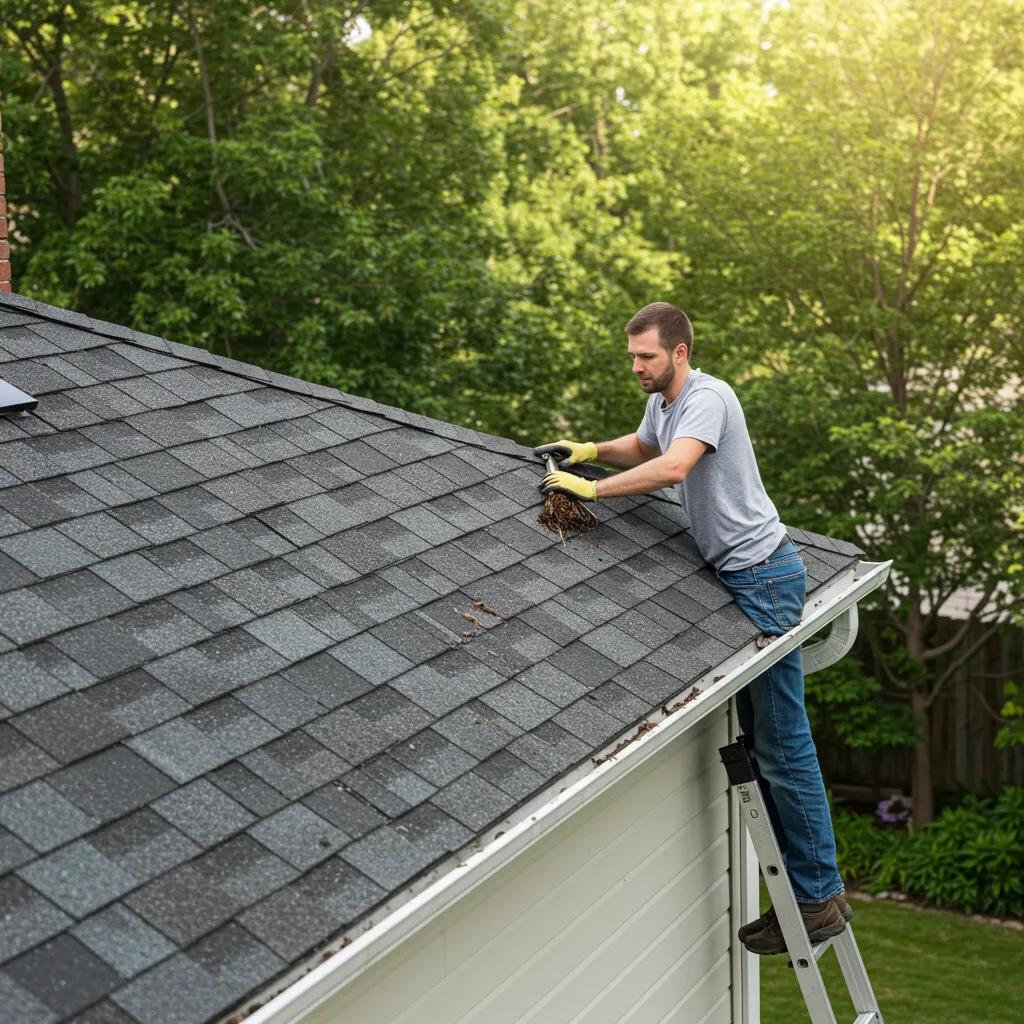
- Keep gutters and valleys clear — standing debris holds moisture exactly where roofs fail first.
- Fix small problems the season you find them — a $400 flashing repair today is a decking repair next year.
- Check the attic, not just the shingles — ventilation and moisture stains tell you more than curb-side squinting.
- Get an inspection after major storms — wind damage compounds; it’s also when insurance claims have to be documented.
- Trim overhanging limbs — less debris, less shade, less algae, fewer punctures.
Roof age and your homeowner’s insurance
One more Maryland reality: insurers increasingly care about roof age. Many carriers scrutinize asphalt roofs past the 15–20 year mark — some move older roofs from replacement-cost coverage to depreciated actual-cash-value, and a roof near the end of its life expectancy can complicate renewals. If your roof is approaching that window, it’s worth knowing your numbers before your insurer decides them for you. Our Maryland roof replacement cost guide lays out exactly what a new roof runs by material and home size.
Frequently asked questions
How long does a “30-year” roof actually last?
Usually 22–28 years in Maryland with decent ventilation — the “30-year” label is a warranty class, not a promise. With poor attic ventilation or repeated storm damage, it can be 15. That gap is why two identical houses on the same street replace their roofs a decade apart.
Roof age shows up in more than leaks, it shows up at closing, which is why we looked at whether a new roof increases home value in Maryland.
How often should a roof be replaced in Maryland?
There’s no calendar answer — replace when the roof tells you, not the clock. Practically: 3-tab asphalt roofs come due around years 15–20, architectural around 25–30. Annual or post-storm inspections catch the real timing.
Can a roof last 50 years?
Asphalt, realistically no — even premium lines. Standing-seam metal genuinely can (40–70 years), and slate routinely passes 75. If a 50+ year roof is the goal, the material conversation starts with metal. If that is the direction you are heading, see what metal roof installation in Maryland actually involves before you start collecting quotes.
Not every ugly roof is a worn-out roof, and dark staining is usually algae rather than shingle failure.
How do I find out how old my roof is?
Check for permits (most Maryland counties require one for replacement), ask for the previous owner’s records or the shingle warranty registration, or have a roofer estimate it from wear — granule condition, shingle flexibility, and flashing style date a roof within a few years.
Does a roof leak mean the roof is done?
Not by itself. One leak at a chimney or pipe boot is a repair. The same leak coming back after repairs, or new leaks appearing in different places, is a roof telling you the system is failing.
Find out how much life your roof has left
We do free roof inspections across Anne Arundel, Howard, Montgomery, and Frederick counties — photos of what we find, a straight answer on remaining lifespan, and if it’s close, the repair number and the replacement number side by side. No pressure either way. Family-owned, MHIC #85703, GAF Certified and CertainTeed ShingleMaster. Call (443) 233-1119.

Talk to a Maryland roofer who tells it straight
Free inspection, photos of what we actually find, and an honest written estimate — whether the answer is a $600 repair or a new roof.




No comment yet, add your voice below!