
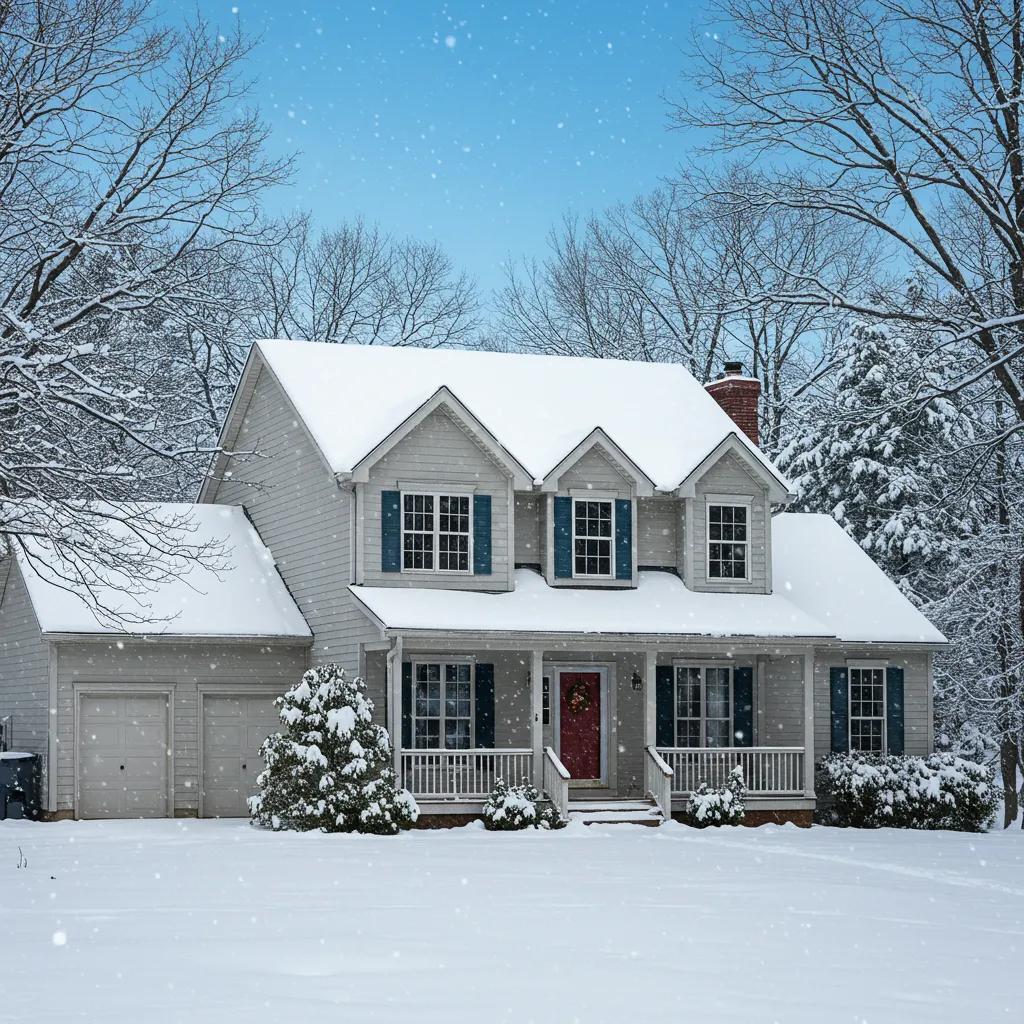
Quick answer: yes — you can replace a roof in winter in Maryland, and we do it every year. The catch is cold-weather technique: asphalt shingles below about 40°F won’t self-seal until spring, so a good crew hand-seals them; a careless crew just nails them down and hopes. Winter roof replacement done right is a perfectly good roof. Done lazily, it’s a roof that loses shingles in the first March wind event. And sometimes — we’ll tell you when — the smart move really is to wait until spring.
Every December, a homeowner calls us convinced they’ve missed their window and have to live with a failing roof until April. Not true. Maryland winters are cold, but they’re not Minnesota: we get plenty of dry 40-degree weeks in December, January, and February, and a roofing team that plans around the forecast can install a roof in the winter that performs exactly like a June roof. Here’s the honest version of how that works.
The real issue: shingle sealing in cold weather
Roofing in cold weather is a technique problem, not a feasibility problem — and the technique is all about sealing. Modern asphalt shingles have a factory adhesive strip on the back. In warm weather, sun heat activates that sealant within days and bonds the roof shingles into one wind-resistant surface — that bond is most of a shingle roof’s wind resistance. In cold temperatures, the adhesive properties change: once the temperature drops below roughly 40°F, the strip stays stiff and the shingles won’t self-seal until the roof surface warms up, which in Maryland might mean March.
Manufacturers publish installation temperatures for exactly this reason. The common guidance across major roofing materials and the big roofing products lines — GAF (our certification), Owens Corning, CertainTeed — is that installing asphalt shingles is fine in colder months if the crew adapts:
- Hand-sealing. The crew applies a dab of approved roofing sealant under each shingle tab so the roof has real wind resistance immediately, instead of waiting for spring sun to do the sealing. This is the single biggest difference between a good and bad winter installation.
- Warm storage. Shingle bundles stored in a warm shop or heated trailer stay flexible. Cold-soaked shingles get brittle, and brittle shingle roofs crack when nailed or bent over ridges.
- Nailing discipline. Cold shingles are less forgiving of overdriven nails. Slower gun pressure, more checking.
- Picking the window. We schedule winter projects around the forecast — a dry stretch, temperatures ideally above freezing and rising, wind speeds low enough for safe work. Maryland winter weather comes in stretches, and it reliably serves up those windows even in January; workers must clear snow or frost off the roof deck before tear-off if anything fell overnight, and a wet or icy deck is a stop-work condition, full stop.
Some product lines are built for this — SBS-modified “flex” shingles (Owens Corning’s Duration Flex shingles are the commonly cited example) are built for cold climates and stay pliable at colder temperatures than standard laminates. Worth asking about if your roofing project has to happen in deep winter.
Winter roofing by material
| Material | Winter installation verdict | The caveat |
|---|---|---|
| Asphalt shingles | Yes, with hand-sealing and warm storage | Below ~40°F, self-sealing waits for spring — hand-sealing is non-negotiable |
| Metal roof (standing seam) | Yes — winter is genuinely fine | Mechanically fastened, no adhesive to worry about; panels just need careful handling. Cold-weather roof work suits metal best |
| Ice & water shield / underlayment | Yes, with technique | Self-adhered membranes also like warmth — primers and hand-rolling in the cold |
| Flat / low-slope (TPO, EPDM) | Depends on system | Adhesive-applied systems have hard temperature floors; mechanically attached ones don’t. System-specific call |
Why winter replacement is sometimes the RIGHT call
- A failing roof doesn’t respect the calendar. If your roof is leaking now, melting snow will find that leak all winter, and interior water damage compounds weekly. Waiting four months to protect your home rarely beats fixing the problem in a good January window — small roof repairs can’t always bridge the gap, and you don’t need to wait for warm weather to get a new roof.
- Ice dams punish weak roofs. Maryland’s freeze-thaw cycling builds ice dams at the eave line, and an ice dam shoves meltwater under old, poorly sealed shingles and can cause leaks even on a roof that survived the summer. A new roofing system — with proper ice and water shield at the eaves, correct insulation and ventilation in the attic — is the actual fix for chronic ice damming, and winter is when you’re motivated to do it.
- Scheduling is easier and faster. Winter is our slow season. You’ll get more scheduling flexibility, a less rushed crew, and the whole job wrapped before the spring storm rush books everyone solid.
- Storm damage can’t wait. When winter storms or high winds take shingles off in January, “wait for spring” isn’t a plan — that’s an emergency tarp from our same-day emergency roof repair crew, followed by repair or replacement in the next dry window.
When waiting for spring is genuinely smarter
We’re a roofing company that does winter installs, and we’ll still tell you to wait sometimes. It’s only a good idea to replace your roof in winter when the roof actually needs it now. Wait until spring if:
- Your roof is old but dry. No leaks, no missing shingles, just age. There’s no prize for replacing it in February versus April — let the weather help the install.
- The stretch ahead is genuinely harsh. In a truly harsh winter — extreme weather week after week, snow or ice on every forecast, freezing temperatures that never break — forcing the roofing project into a bad window invites sloppy work. A short wait beats a compromised install.
- You want a specific extreme-cold product or color that’s backordered. Supply is thinner in the colder months for some lines.
- The quote depends on winter pressure. Any roofing contractor pushing you to sign today because “prices go up in spring” is selling urgency, not roofing. Get a second number.
One thing that should never drive the decision: panic pricing. Full replacements in our Maryland market run $9,000–$25,000 regardless of season — our Maryland roof replacement cost guide breaks down what moves the number, and winter isn’t meaningfully one of them. We price the roof, not the month.
What a good winter install looks like day-of
Here’s how replacing a roof during winter actually runs on our crews:
- Snow removal first, if needed. The deck gets cleared and dried — snow or ice on the roof deck means we don’t start. Rooftop snow hides soft decking and makes working on the roof dangerous.
- Tear-off in sections. In winter we open only what we can dry-in the same day, so a surprise turn of harsh weather never catches exposed deck.
- Ice and water shield at eaves and valleys. Standard on our installs; in winter it’s also the working weather protection while the job progresses.
- Install new shingles from warm storage, hand-sealed as they go. Every tab gets adhesive attention, so the new roof is wind-ready the day the new roof is installed — not in March when the sun finally does its part.
- Ventilation and insulation check. Winter is actually the best time to see attic problems: frost on nail tips and wet insulation show exactly where warm air leaks into the attic and where meltwater will refreeze at the eave. Fixing airflow during the replacement kills future ice dams and helps the shingles last their full life.
- Cleanup with magnets, twice. Nails hide in snow-melt slush better than in grass. Roof and gutters get cleared and the gutter runs flushed before we leave.
Frequently asked questions
What temperature is too cold to install shingles?
There’s no absolute cutoff — the commonly cited working temperature to install shingles is 40°F and rising, because below that the self-seal strips on asphalt shingles won’t activate on their own. Good crews install colder than that by hand-sealing each shingle and keeping bundles warm; what actually stops roof work is a wet or icy deck, high winds, or active precipitation.
Will shingles installed in winter seal properly?
Hand-sealed ones, yes — immediately. Shingles installed without hand-sealing in cold weather sit unsealed until the roof surface warms in spring, which leaves them vulnerable to winter wind. Sealing issues are the number-one thing we find on winter roof installation jobs done by low-bid crews: ask any roofer quoting a winter job, specifically, how they handle sealing the shingles. The answer tells you who you’re hiring.
Is a roof replacement cheaper in the winter?
Sometimes modestly — winter is one of the slowest times of the year for roofers, so scheduling is flexible and some contractors sharpen pencils. But material costs don’t drop, and cold-weather technique takes more labor time, so don’t expect dramatic savings. Be suspicious of a winter quote far below the market range; the discount usually comes out of the hand-sealing.
Can you replace a roof with snow on it?
Not while snow is on it — workers must clear snow and frost from the roof deck first, and if more is actively falling, the day gets rescheduled. Light snow around the job site is workable; a buried or icy roof is not. This is why winter projects get scheduled against the forecast with a built-in flex day.
Is it better to replace a roof in winter or wait until spring?
If the roof is failing — leaking, missing shingles, active ice dam damage — replace it in the next good winter window; waiting months with a compromised roof costs more than the season saves. If the roof is tired but dry, spring is fine and the install conditions are friendlier. An honest inspection settles it: many homeowners who call us in January panic-mode end up scheduled comfortably for March once we’ve confirmed the roof will make it.
Do metal roofs have the same winter installation problems?
No — this is where metal shines. A standing seam metal roof is mechanically fastened, with no adhesive that needs warmth, so winter installation is essentially business as usual with careful panel handling. If your replacement has to happen in deep winter and you were already considering metal, the season is a point in its favor.
Need a roof this winter? Get a straight answer first
We install roofs across Anne Arundel, Howard, Montgomery, Frederick, and Baltimore counties all twelve months of the year — with cold-weather technique when the calendar calls for it, and an honest “this can wait until spring” when it can’t. Start with an inspection and a real quote from our roof replacement and installation team, and we’ll tell you which season your roof actually needs. Family-owned, GAF Certified, MHIC #85703. Call (443) 233-1119.

Talk to a Maryland roofer who tells it straight
Free inspection, photos of what we actually find, and an honest written estimate — whether the answer is a $600 repair or a new roof.



No comment yet, add your voice below!