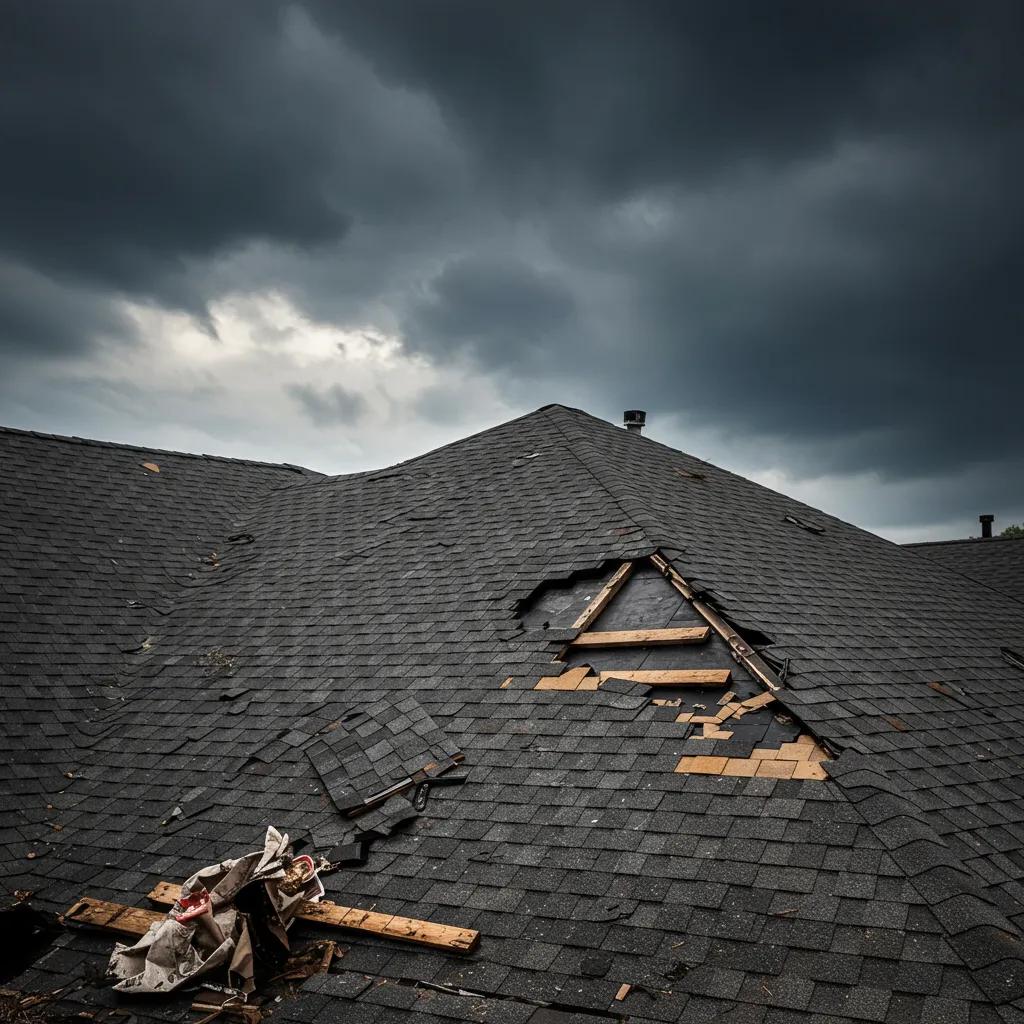
Quick answer: if someone you didn’t call is standing on your porch offering a free roof inspection right after a storm, treat it as a sales pitch at best and a roofing scam at worst — and never sign anything, pay anything, or let anyone on your roof the same day they knocked. Maryland’s derechos, nor’easters, and summer hail bring out two waves: first the storm, then the storm chasers.
We’re a local roofing company, and to be fair to our industry: knocking on doors isn’t itself a crime, and a handful of legitimate roofing companies canvass. But nearly every homeowner horror story we hear across Anne Arundel, Howard, and Montgomery counties starts the same way — a stranger at the door, a free inspection, and pressure to sign before the truck leaves the neighborhood. Here’s the door-to-door playbook, the warning signs, and the two-minute check that separates a reputable roofing contractor from a scammer — the same advice we give about roofing scams after storms every single season.
The post-storm door-knocker playbook
Storm chasers follow severe weather from state to state because insurance-funded roof replacements are concentrated, fast money. The script rarely changes:
- The canvass. Within days of a storm, crews sweep affected neighborhoods knocking on doors: “We’re doing your neighbor’s roof and noticed some damage on yours.”
- The free roof inspection. Sounds harmless. But an unsolicited inspection from someone with a sales quota reliably finds damage — and in the ugliest version of this roof inspection scam, damage that wasn’t there before gets “found” after a few minutes of privacy up top.
- The urgency. “Your insurance deadline is coming.” “We can only hold this price today.” “The next storm will finish the roof off.” High-pressure timelines exist to stop you from checking them out.
- The paperwork. You’re asked to sign something “just to get the process started” — often a contract, sometimes an assignment-of-benefits-style agreement that hands them control of your insurance claim.
- The exit. Best case, you get a rushed, mediocre roof and a workmanship warranty from a company that’s three states away by November. Worst case, a big deposit disappears and no crew ever shows.
Red flags, in rough order of how fast we’d close the door
- No MHIC license number. Every contractor doing residential roofing work in Maryland must hold one, and it should be on the truck, the card, and the paperwork. No number — or a number they discourage you from checking — ends the conversation. Our step-by-step MHIC lookup guide shows how to verify any roofer in about two minutes, free.
- Out-of-state plates and area codes. Not proof of a scam, but storm chasers are by definition not local — and a workmanship warranty is worth exactly as much as the company’s odds of existing nearby in five years.
- “We’ll cover your deductible.” This one isn’t a gray area. Waiving or rebating an insurance deductible generally means misrepresenting the claim to the insurance company — that’s insurance fraud territory, and the homeowner can be exposed too, not just the contractor. A contractor whose opening offer involves deceiving your insurer will not treat you better than they treat the insurer.
- Pressure to sign an assignment of benefits or “contingency agreement” on the spot. Documents like these can hand a stranger control over your insurance claim and its proceeds. Never sign claim paperwork at the door; read it, sleep on it, and ask your insurance company what it actually does. If it’s a good deal today, it’s a good deal Thursday.
- A “free roof.” Roofs are not free. What’s being described is your insurance paying — often padded, sometimes fraudulently — plus your deductible handled by one of the tricks above.
- Large cash deposit up front. Maryland law limits what home improvement contractors can collect before work starts. “Half down, cash, today” is both a legal problem and the classic setup for a disappearing act.
- The too-low bid. Get at least two or three written quotes. A low bid thousands under everyone else isn’t a bargain — it’s missing flashing, permits, disposal, or the intention to finish.
- Vague company identity. No physical address, a brand-new name, no reviews anywhere, magnetic signs on the truck. Legitimate roofing companies leave a paper trail you can find in five minutes.
Scam vs. legitimate canvasser: how to tell
| Storm-chaser pattern | Legitimate local roofer | |
|---|---|---|
| MHIC license | None, borrowed, or “don’t worry about it” | Number offered instantly; checks out in the state lookup |
| Address | P.O. box, another state, or none | Local address you can visit (ours is in Millersville) |
| Timeline | Sign today, price expires when I leave | Written quote that’s still valid after you get two others |
| Deductible | “We’ll take care of it” | You pay it — anything else risks insurance fraud |
| Insurance claim | Wants signed control of it at the door | Documents damage, gives you a report, you run your claim |
| References | “We did a bunch of houses two towns over” | Recent local jobs and reviews you can actually check |
| Warranty | Big promise, no company behind it by winter | Workmanship warranty from a business that will still exist |
How to vet instead: the two-minute defense
You don’t need to become an expert in common roofing scams. You need one habit: never act on an unsolicited roofing contact without independent verification. In practice:
- Run the MHIC lookup. Maryland’s license search is free and takes two minutes. Unlicensed or unverifiable — done, no further analysis needed.
- Check the local footprint. Real address on a map, reviews with history (not twenty five-star reviews from last month), a phone number someone answers. The Better Business Bureau listing is worth a glance for pattern complaints.
- Get your own inspection. If a door-knocker says you have storm damage, maybe you do — Maryland hail and wind are real. Verify it with a reputable local roofing contractor you chose and called, and let them recommend a roof repair or replacement on the merits. If the damage is real, it’ll still be there.
- Talk to your insurance company yourself. You file the claim; you don’t outsource that decision to a salesperson with a commission on the answer. Claims processes and coverage vary by carrier, so get your answers from yours.
- Slow everything down. Every legitimate price survives a week of thinking. Urgency is the scammer’s only real tool — remove it and the whole playbook collapses.
For the full hiring checklist beyond scam defense — insurance certificates, warranty terms, payment schedules — our Maryland roofing contractors guide covers the fifteen questions we’d ask anyone quoting our own roof.
If your roof genuinely is damaged
Storms do wreck roofs here — we spend every derecho season tarping and repairing them. If you have active leaking, missing shingles, or a tree strike, the right order of operations is: protect the house first (tarping and emergency repair), document everything with photos, then make the insurance and repair-vs-replace decisions calmly. Our emergency roof repair service handles same-day response across our service area — and because we’re local and licensed, you can verify us before we ever climb a ladder, which is exactly how it should work.
If you already signed something
Don’t panic, and don’t assume you’re stuck. Maryland door-to-door sales generally come with a short cancellation window for contracts signed at your home — act fast and put your cancellation in writing. If you believe you’ve encountered a scam, report it to the Maryland Home Improvement Commission and the Maryland Attorney General’s consumer protection division; if claim fraud is involved, tell your insurance company too. Specifics of cancellation rights and deadlines vary with the situation — a call to the Commission or a consumer-protection attorney beats guessing.
Frequently asked questions
How do you spot a door-to-door roofing scammer?
The cluster: unsolicited contact after a storm, a free inspection that finds urgent damage, pressure to sign today, deductible “help,” and no verifiable Maryland MHIC license. Any one might be innocent; the pattern together is the scam.
Are door-to-door roofers always a scam?
No — some legitimate companies canvass, and a knock isn’t proof of anything. The difference is what happens next: a legitimate roofer hands you verifiable credentials and a quote that survives comparison shopping. A scammer needs you to decide before you check.
Is it illegal for a roofer to pay my deductible in Maryland?
Deductible-waiving schemes generally work by misrepresenting the true job cost to your insurer — which crosses into insurance fraud, with potential exposure for the homeowner as well as the contractor. Treat any “we’ll handle your deductible” offer as a walk-away flag, and direct questions about your specific policy to your carrier.
Should I sign an assignment of benefits for a roof repair?
Not at your door, and not without reading it and asking your insurance company what it does. Documents that transfer control of your claim to a contractor deserve the same scrutiny as any legal contract — because that’s what they are.
What should I do if a storm chaser says I have roof damage?
Thank them, close the door, and get an independent opinion from a local, MHIC-licensed contractor you contacted yourself. If the damage is real, it will still be real after verification — and you’ll be dealing with a company that answers its phone in February.
How do I report a roofing scam in Maryland?
Report it to the Maryland Home Improvement Commission (which licenses and disciplines contractors) and the Maryland Attorney General’s consumer protection division. If your insurance claim was involved, notify your carrier as well. Reporting details vary by case — both agencies take consumer complaints directly.
Verify first — us included
Our standing advice after every Maryland storm is the same whether or not we get the job: let no one on your roof whose license you haven’t checked. Look us up — MHIC #85703 — then call if you want a straight answer about what your roof actually needs, including “nothing yet.” Family-owned in Millersville, GAF Certified. Call (443) 233-1119.
Talk to a Maryland roofer who tells it straight
Free inspection, photos of what we actually find, and an honest written estimate — whether the answer is a $600 repair or a new roof.



No comment yet, add your voice below!