Here’s the short answer: for almost every owner-occupied home in Maryland, architectural shingles are worth the upgrade over 3-tab. On a typical roof the price difference is somewhere between a few hundred and a couple thousand dollars — and for that you get roughly a decade of extra life, close to double the wind rating, and a noticeably better-looking roof. They’re the two main types of asphalt shingles, and there are still a few situations where 3-tab makes sense — we’ll be straight about those too. If you are weighing a bigger upgrade, our metal roof vs shingles comparison runs the same cost-per-year math against standing seam.
We install both across Anne Arundel, Howard, Montgomery, and Frederick counties, so this comparison comes from crews who put these shingles on Maryland roofs every week — not from a manufacturer’s brochure.
The difference between 3-tab and architectural shingles
3-tab shingles are the flat, single-layer strips that covered most American roofs for decades. Each strip has two cutouts that divide it into three “tabs,” which is where the name comes from. One layer of asphalt and granules, one uniform thickness, one flat look.
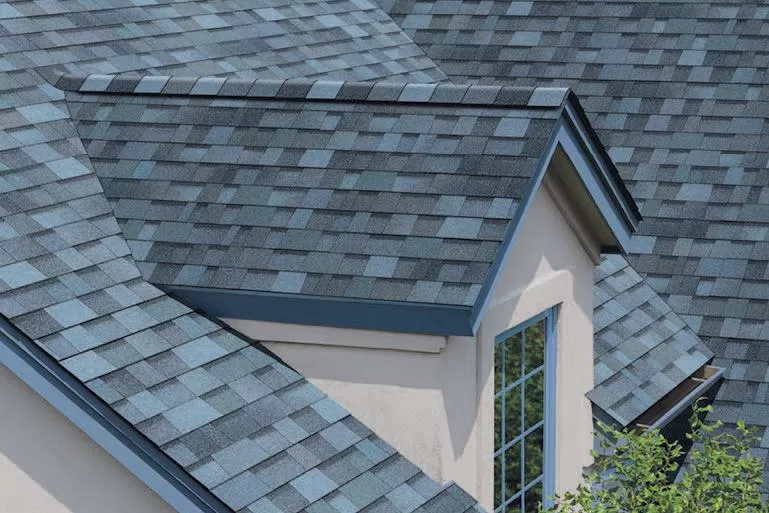
Architectural shingles (also called dimensional or laminated shingles) are built from two or more layers of asphalt laminated together. Architectural shingles are thicker and heavier — and stronger — and that gives the roof a layered, dimensional look that reads like wood shake from the street instead of a flat grid.
Architectural shingles vs 3-tab: cost, lifespan, and wind, side by side
| 3-tab shingles | Architectural shingles | |
|---|---|---|
| Typical installed cost (MD) | $8,000 – $13,000 | $9,000 – $16,000 |
| Expected lifespan | ~15–20 years | ~25–30 years |
| Typical wind rating | ~60–70 mph | ~110–130 mph |
| Construction | Single layer | Two+ laminated layers |
| Warranty range | ~20–30 years | Commonly “limited lifetime” |
| Curb appeal / resale | Flat, dated look | Dimensional; buyers and appraisers expect it |
The cost difference is smaller than most people think
Homeowners often assume the higher upfront cost of architectural shingles is dramatic. It isn’t — because most of a roofing bill isn’t shingles. Labor, tear-off, underlayment, ice-and-water shield, flashing, and ventilation cost the same no matter which type of shingle goes on top of the roofing system. The material difference on a typical Maryland home usually works out to a few hundred dollars, up to a couple thousand on larger roofs. Spread over the extra decade of life you get, the upgrade is one of the cheapest per-year improvements in roofing — and usually the right roofing material by simple math. Our Maryland roof replacement cost guide breaks down the full math by material and home size.
Why the wind rating matters here specifically
Maryland roofs take real wind — thunderstorm gust fronts in the summer, nor’easters off the Chesapeake in the winter, and the occasional tropical remnant. A standard 3-tab shingle is rated for roughly 60–70 mph; the storms that knock out power in Anne Arundel County routinely gust past that. Architectural shingles are typically rated for 110–130 mph high winds when installed to spec. In practice, that’s the difference between “check the yard for shingles after every big storm” and “don’t think about it.” It also matters to your wallet: wind damage is the single most common reason we get called for roof repair after storm season.
The algae point nobody mentions in national comparisons
Maryland’s humid summers feed the black streaks you see on so many roofs here — a hardy algae that thrives on the crushed limestone filler in shingles. Most modern architectural lines from GAF, CertainTeed, and Owens Corning include copper-infused algae-resistant granules with long streak-free warranties; budget 3-tab lines often carry weaker algae protection or none. In a state this humid, that’s a real cosmetic difference at year ten, not a spec-sheet footnote.
When 3-tab still makes sense
An honest list, because it’s short:
- Matching an existing 3-tab roof — if you’re repairing a section and the rest of the roof is 3-tab, matching beats mixing.
- A rental or a flip on a tight budget — when every dollar of upfront cost matters more than lifespan, 3-tab is the cheaper check to write.
- Sheds and outbuildings — structures where longevity and looks matter less.
- A house you’re selling soon — though even here, think twice: a fresh architectural roof shows better at the open house, and buyers’ inspectors flag 3-tab as the budget roofing option.
Outside those cases, on a home you plan to live in, we genuinely can’t make the math work for 3-tab — which is why we choose architectural shingles as the default on nearly every full roof replacement we install.
What we install, and how the warranty really works
We’re GAF Certified and CertainTeed ShingleMaster credentialed, and we install architectural lines from GAF, CertainTeed, and Owens Corning. One thing worth knowing: those long manufacturer warranties are conditional on the shingles being installed exactly to spec — nailing pattern, underlayment, ventilation, ice-and-water shield. A bargain crew that shortcuts the system doesn’t just build a weaker roof; it can quietly void the warranty you paid for. That’s true for both shingle types, but it stings more when you bought the premium one. More on choosing materials for our climate in our guide to the best roofing materials for Maryland homes.
Frequently asked questions
Are architectural shingles worth the extra cost?
For an owner-occupied Maryland home, almost always yes. The upgrade typically adds a few hundred to a couple thousand dollars on a full replacement, and returns roughly ten extra years of life, nearly double the wind rating, better algae resistance, and stronger resale presentation. Cost per year of roof life, architectural is usually the cheaper shingle.
Shingle grade also drives what the manufacturer will stand behind, which we unpack in roofing warranties explained.
How much longer do architectural shingles last than 3-tab?
In Maryland’s climate, 3-tab shingles last roughly 15–20 years, while architectural shingles last 25–30. Ventilation, sun exposure, and tree cover move both numbers — a poorly vented attic ages any shingle faster.
Can I put architectural shingles over my old 3-tab roof?
Roofing over an existing layer is sometimes allowed by code, but we rarely recommend it: it hides deck problems, adds weight, ages the new shingles faster, and can complicate the warranty. A proper tear-off costs more up front and is almost always the better roof.
Asphalt is not the only option on older Maryland homes, as we cover in slate and cedar on historic Maryland homes.
Do architectural shingles help with resale value?
Yes, in the sense that matters: buyers and home inspectors in the Maryland market treat an aging 3-tab roof as a negotiating point, while a recent architectural roof removes the objection entirely. You rarely recover the full cost of any roof at sale — but you avoid giving back more than it cost in negotiation.
What about “50-year” or “lifetime” shingle claims?
“Limited lifetime” is a warranty term, not a lifespan prediction — coverage typically prorates after an initial period, and it’s conditional on spec installation and often on registration. Expect a good architectural roof in Maryland to perform for 25–30 years. Anyone promising 50 trouble-free years from standard asphalt is selling, not measuring.
Get a straight recommendation for your roof
If you’re weighing the differences between 3-tab and architectural shingles anywhere in Anne Arundel, Howard, Montgomery, or Frederick County, we’ll look at your roof, your plans for the house, and your budget, and tell you plainly which shingle the math favors — with a free written estimate for each if it’s close. Family-owned, MHIC #85703. Call (443) 233-1119.

Talk to a Maryland roofer who tells it straight
Free inspection, photos of what we actually find, and an honest written estimate — whether the answer is a $600 repair or a new roof.




No comment yet, add your voice below!