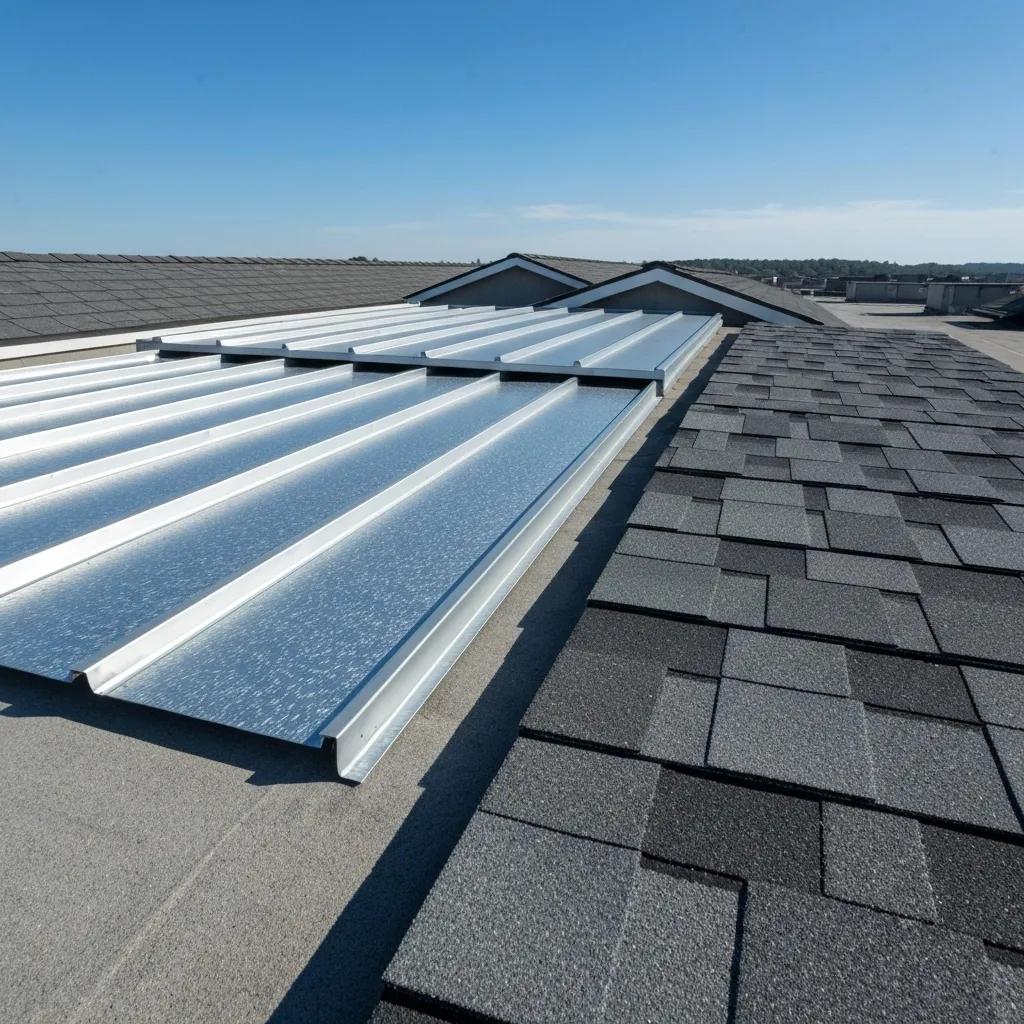
Quick answer: a natural slate roof is the longest-lived roofing material you can put on a Maryland home — 75 to 100+ years, often outlasting the people who install it — while cedar shakes deliver 20–30 years of unmatched character. Both come with real costs, real approval hurdles in historic districts like Frederick and Annapolis, and one under-told truth: most slate roof “failures” aren’t the slate at all. They’re the flashing and underlayment underneath.
Maryland’s historic housing stock is among the richest in the country — Federal rowhouses in Annapolis, Victorian streetscapes in Frederick, early-1900s slate across the Baltimore area from north Baltimore neighborhoods on down, and the older streets of Bethesda, Chevy Chase, and Potomac. These homes and buildings were roofed in the two great natural roofing materials of their era: slate and cedar. We get called to look at these roofs regularly, and the conversation is almost never “should we go back to slate?” It’s “what is this roof actually telling us, what will the historic district allow, and what does honest craftsmanship cost?” Here’s how we walk through it at the kitchen table.
Slate roofing in Maryland: what a century-old roof is worth
Slate is stone — split, not manufactured. That’s why slate roofs can last 75–100+ years on a Maryland home, shrugging off nor’easters, humidity, and freeze-thaw cycles that would have consumed three or four asphalt shingle roofs across the same lifespan. Hard slates (like Buckingham from Virginia) routinely pass the century mark; softer Pennsylvania slates run shorter but still generations. Beyond longevity, slate is fireproof, long-lasting with remarkably little maintenance, an environmentally friendly roofing choice (it’s literally rock, fully reusable), and of all the roofing materials available, it carries an aesthetic appeal and home value story nothing else matches on a historic property. Among premium types of roofing, only clay tile plays in the same century-scale league — and clay is rare on Maryland’s historic homes, so slate is the conversation here.
The honest other half:
- Cost. New natural slate is the most expensive common roofing material in the market — typically several times the cost of architectural shingles, with a full slate roof replacement on a large historic home running well into six figures. Prices vary widely with slate type, thickness, and roof complexity, so treat any number as a starting range, not a quote.
- Weight. Slate tiles are heavy. Homes originally built for slate carry it fine; putting slate on a structure that never had it usually means an engineer and reinforcement first.
- Craft scarcity. Slate is a specialty trade within the roofing industry, and historic roofing contractors with real slate benches are scarce — many roofing companies quietly hand slate roof work to subcontractors, which is exactly what you don’t want on a century-old roof. A crew that’s brilliant with asphalt can wreck a slate roof in an afternoon — walking on it wrong breaks tiles. Repairs demand a roofer with real slate experience, a ripper, and patience — the trade guidance published by groups like the National Roofing Contractors Association treats slate as its own discipline for a reason.
- Brittleness. Individual slate shingles crack from foot traffic, falling limbs, and careless satellite installers — the classic culprits on the older roofs we inspect.
The truth about “failing” slate roofs
Here’s the part that saves some homeowners a fortune: when a 90-year-old slate roof leaks, the slate is usually innocent. What fails is everything around it — the metal flashing in the valleys and around chimneys, which was often original steel or terne that has simply rusted out after 80 years, and the felt underlayment, which was never designed to outlive the stone above it. The slate itself may have decades left.
That distinction changes the entire repair conversation:
| What you’re seeing | What it usually means | The right fix |
|---|---|---|
| Leak at a valley or chimney | Failed flashing, not failed slate | Rebuild the flashing in copper; reuse the surrounding tiles |
| A handful of cracked or slipped tiles | Impact or old repair hardware | Individual tile replacement with matched slate — routine roof repair for a slate-literate crew |
| Slates flaking, powdering, holding moisture | The slate itself is delaminating (soft slate at end of life) | Now you’re genuinely talking replacement |
| Widespread fastener failure (“nail sickness”) | Original nails rusting through | Section-by-section relay of the existing slate on new underlayment |
So before any roofing contractor sells you a full roof replacement — a new roof where the old one just needed metalwork — insist on this question being answered with photos from the job site: is the stone failing, or is the metal? A contractor who can’t tell you the difference shouldn’t be on that roof. Properly installed flashing repairs and replacements — the bread and butter of good slate roof repair and installation — can buy a sound slate roof another 30–50 years for a small fraction of tear-off money — and on a historic home, keeping the original roof is almost always the right answer for value, approvals, and authenticity.
Cedar shakes: character on a shorter clock
Cedar is the other traditional roofing material on Maryland’s historic homes, and it plays by opposite rules: modest weight, warm looks, and a much shorter life. In our humid climate, expect 20–30 years from a cedar shake roof — the wetter and shadier the lot, the closer to 20. Maryland humidity is cedar’s real enemy: moss, algae, and rot work the shaded slopes, and skipping maintenance (debris removal, keeping gutters clear, occasional treatment) gives years back. Cedar wants to breathe; the best installs use proper spacing or vent mesh underneath rather than shakes nailed tight to solid sheathing.
Who cedar is right for: owners of homes where wood is the historically appropriate look, buyers who love how it silvers, and people who accept a 25-year roof as the price of the prettiest material on the street. Who it isn’t: anyone expecting slate-like longevity or asphalt-like maintenance. It’s honest to say most of our cedar conversations end with either “yes, and here’s the maintenance calendar” or a pivot to a heavyweight architectural shingle that echoes the shake look.
Historic districts: Frederick, Annapolis, and the approval reality
If your home sits in a designated historic district, the roof isn’t entirely your call. Frederick’s downtown Historic District and the Annapolis Historic District both run design review — a commission that must approve exterior changes, roofing very much included. The working rules we see in practice across Maryland’s historic districts:
- Like-for-like repairs are the smooth path. Repairing slate with matched slate, or replacing in-kind, generally sails through — often with streamlined or administrative approval.
- Material changes are where projects stall. Swapping visible slate for asphalt on a contributing structure is frequently denied outright; commissions exist precisely to prevent that. Changes on slopes not visible from the street get more flexibility.
- Synthetic slate is the live negotiation. Composite slate tiles have gotten convincing, and some Maryland commissions now accept the best of them case by case where natural slate is economically out of reach; others still hold the line for natural material on street-facing slopes. Bring physical samples to the hearing — it genuinely helps.
- Approval is a separate track from permits. The historic commission’s certificate of approval comes before the county building permit, and both processes vary by jurisdiction — our Maryland roofing permits guide covers how that layer works county by county. Budget weeks, sometimes a couple of months, for the historic step.
We work these towns regularly — details on our Frederick roofing page and our Annapolis roofing page — and the single best advice we can give is to talk to the district staff early, before you fall in love with a material. Every commission publishes guidelines; none of them enjoys surprises.
Synthetic slate: the compromise that earns its place
Synthetic slate — engineered polymer or composite tile molded from real slate — has become one of the most popular roofing products in this niche, and it’s the option we find ourselves recommending most often when a homeowner loves the slate look but not the slate invoice. The honest scorecard: it weighs a quarter of natural slate (no structural work), installs like a conventional roof, is genuinely low-maintenance, typically prices far closer to premium shingles than to stone, carries 50-year-class warranties, and the best products fool most eyes from the curb. What it isn’t: stone. It won’t see 100 years, it’s only as good as its manufacturer’s warranty — the best slate composites come from established makers, so vet the product as hard as the installer — and a purist commission may still say no on a street-facing slope. For a non-historic Maryland home that wants the slate aesthetic — or a historic one whose commission accepts it — it’s a genuinely good roofing solution, not a consolation prize. Our Maryland roofing materials guide puts it alongside every other option.
Frequently asked questions
How long does a slate roof last in Maryland?
Hard natural slate delivers 75–100+ years here, and well-maintained examples from the early 1900s are still working throughout Baltimore, Annapolis, and Frederick. Softer slates run shorter. The flashing and underlayment beneath the stone fail decades sooner — which is why maintenance, not the slate, usually decides the roof’s fate.
What is the major disadvantage of a slate roof?
Cost, then weight, then scarcity of qualified installers. New slate is several times the price of architectural shingles, the structure has to carry the load, and repairs demand a slate-experienced roofer — walking on slate wrong cracks tiles and creates the very leaks you were trying to fix.
Do I need permission to change a slate roof in a historic district?
In designated districts like downtown Frederick or the Annapolis Historic District, visible exterior changes generally require approval from the historic commission before your building permit. Like-for-like slate repair is usually straightforward; replacing visible slate with a different material is the request most often denied. Rules vary by jurisdiction — check with district staff early.
Is synthetic slate as good as real slate?
It’s a different product with a different promise: a quarter of the weight, a fraction of the price, 50-year-class warranties, and a very convincing look — but not a century of stone. For many Maryland homes it’s the right call; for a contributing historic structure, the commission may still require natural slate on street-facing slopes.
How long do cedar shake roofs last in Maryland?
Plan on 20–30 years. Maryland humidity is the limiting factor — moss and rot work shaded, damp slopes hardest — so tree cover, ventilation, and maintenance decide which end of that range you get.
Can you repair just part of a slate roof?
Yes — that’s the normal way slate is maintained. Individual cracked or slipped tiles are replaced with matched slate, and worn valley or chimney flashing is rebuilt in copper while the surrounding tiles are reused. A slate roof is a collection of century-old parts on different clocks; a good slate roofing service replaces the part that’s actually failed.
Get eyes on your slate or cedar roof before anyone sells you a tear-off
Historic roofing services live or die on diagnosis. The preferred roofing partner for a historic exterior home isn’t whoever quotes fastest — it’s roofing experts who can read a century-old roof honestly. Whatever your roofing needs — slate roofing installation on an addition, a cedar maintenance plan, ongoing slate service, or a second opinion on a scary quote — the most valuable thing a roofing company can offer a historic-home owner is a straight answer: whether your slate is genuinely at end of life or just wearing out its flashing, whether your cedar needs maintenance or retirement, and what your historic district will realistically approve. We’re a family-owned business out of Millersville, our own crews do the roof work with expert installation and no mystery subcontractors, and we’ll tell you the honest answer even when it’s the smaller job — protecting the integrity of your home is the point. Property owners in historic districts especially deserve a roofer who knows the approval process before the ladder goes up. Serving Anne Arundel, Howard, Montgomery, Frederick, and Baltimore counties. MHIC #85703, GAF Certified, CertainTeed ShingleMaster. Call (443) 233-1119.
Talk to a Maryland roofer who tells it straight
Free inspection, photos of what we actually find, and an honest written estimate — whether the answer is a $600 repair or a new roof.


No comment yet, add your voice below!