Best Roofing Options for Homes in Maryland

Short answer: for most Maryland homes, architectural asphalt shingles are the best-value roof — and for homeowners planning to stay 20+ years, standing-seam metal is worth a serious look. But “best” depends on your house, your budget, and your block: a waterfront home in Severna Park, a historic rowhouse in Frederick, and a colonial in Columbia genuinely have different right answers. This guide covers every roofing option we install across Maryland, with honest numbers and the local factors national guides skip. For the low-slope sections many Maryland homes have over additions and porches, see our flat roof repair and replacement options. Deciding between the two most common systems? Our metal vs shingle breakdown covers the real numbers. For the walls rather than the roof, see our Maryland siding comparison.
What Maryland asks of a roof
Our climate is a specific test: humid summers that feed roof algae, freeze-thaw winters that pry at every seam, real wind off thunderstorm gust fronts and nor’easters, heavy tree cover on wooded lots, and salt air near the Chesapeake that corrodes cheap metal components. A material that performs in Arizona can age badly here — so every recommendation below is filtered through Maryland weather, not a national chart.
The options, compared
| Material | Installed cost (MD) | Lifespan | Best Maryland fit |
|---|---|---|---|
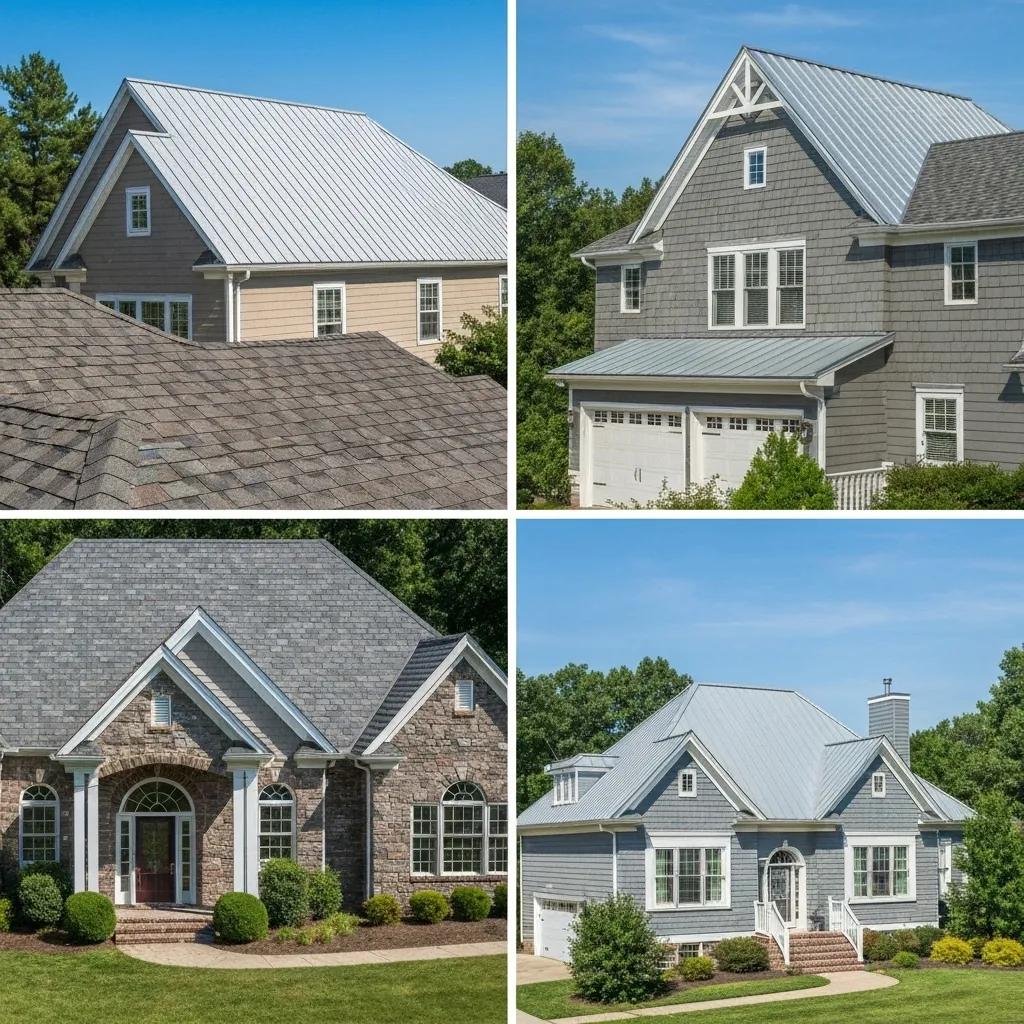
| Architectural asphalt shingles | $9,000 – $16,000 | ~25–30 yrs | The default — best value for most homes |
| 3-tab asphalt shingles | $8,000 – $13,000 | ~15–20 yrs | Budget jobs, rentals, matching existing 3-tab |
| Standing-seam metal | $18,000 – $35,000+ | ~40–70 yrs | Long-haul owners; waterfront/salt-air homes |
| Cedar shake | $25,000+ | ~20–30 yrs | Looks — but high maintenance in our humidity |
| Slate | $30,000+ | 75–100+ yrs | Historic homes; a roof you buy once |
| Synthetic slate/shake | $20,000 – $35,000 | ~40–50 yrs | Historic look without slate weight/cost |
| Flat systems (TPO/EPDM) | priced per sq ft | ~20–30 yrs | Flat sections, porches, townhome roofs |
Architectural asphalt shingles — the Maryland default
Laminated, dimensional, rated for roughly double the wind of 3-tab, and available in algae-resistant lines that matter in our humidity. The upgrade from 3-tab usually costs a few hundred to a couple thousand dollars and buys about a decade of extra life — the full comparison is in our architectural vs. 3-tab guide. We install GAF, CertainTeed, and Owens Corning lines to manufacturer spec, which is what keeps the long warranties valid.
3-tab shingles — the honest budget option
Cheaper up front, shorter-lived, flatter-looking, and rated for less wind than Maryland storms deliver. The legitimate uses: matching an existing 3-tab roof on a partial job, tight-budget rentals and flips, and outbuildings. On an owner-occupied home, the per-year math almost never favors it.
Standing-seam metal — the long-haul choice
Forty to seventy years, sheds snow, shrugs off wind, and — a genuinely underrated Maryland point — quality metal with corrosion-resistant fasteners is the best answer to salt air on waterfront and near-Bay homes, where budget metal components corrode fastest. It costs roughly double asphalt up front and can outlast two asphalt roofs. Details on our metal roofing service page. We go deeper on panel types, coastal-grade fasteners and real pricing on our standing seam metal roofing page.
Homes near the water play by different rules, which is why we wrote a separate guide to the best roof for Chesapeake Bay and waterfront homes.
Cedar, slate, and synthetics — the character options
Cedar shake is beautiful and demands the most maintenance of anything on this list in our humidity — moss, splitting, and periodic treatment are part of ownership. Slate is a buy-once roof: 75–100+ years, with the flashing and underlayment failing long before the stone; it’s also heavy and premium-priced, which is why we see it mostly on historic homes in Annapolis and Frederick — where historic-district rules may require appropriate materials anyway (see our Maryland permits guide for that approval layer). Synthetic slate and shake deliver the look at half the weight and a friendlier price, with 40–50 year lifespans — an increasingly common compromise we quote on character homes.
Flat and low-slope sections — TPO and EPDM
Porch roofs, additions, and townhome roofs across Maryland run flat or low-slope, and shingles are the wrong tool there. Membrane systems — TPO and EPDM — price by the square foot and handle ponding water that would destroy shingles. Most homes with a flat section get a hybrid quote: shingles or metal on the pitched roof, membrane on the flat.
If your current roof has dark stains running down it, that is usually algae rather than failure, and we explain black streaks on Maryland roofs in detail.
Our honest recommendations by situation
- Most Maryland homes: architectural asphalt with algae-resistant granules. Best value, best availability, easiest insurance conversation.
- Staying 20+ years, or waterfront: price standing-seam metal against two future asphalt roofs — the math is closer than most expect.
- Historic district (Annapolis, Frederick): slate, synthetic slate, or cedar per your district’s rules — we handle the approval paperwork.
- Selling in a few years: a clean architectural roof shows best at the price; premium materials rarely return their cost at sale.
- Budget-tight rental: 3-tab is a defensible check to write — we’ll say so plainly instead of upselling.
Frequently asked questions
What roof material lasts longest in Maryland?
Slate (75–100+ years), then standing-seam metal (40–70), then synthetics (40–50), then architectural asphalt (25–30). For lifespan per dollar on a typical home, architectural asphalt and metal are the two serious contenders.
What’s the most energy-efficient roof for Maryland?
Metal reflects summer heat best, and lighter colors help any material. But in our climate the bigger energy lever is usually attic ventilation and insulation — a well-vented architectural roof often beats a poorly vented premium one on real bills.
Roofing is rarely the only envelope decision on the table, so here is when to replace windows in Maryland.
Is a metal roof worth it in Maryland?
If you’ll own the home long enough to skip an asphalt replacement cycle — usually yes. If you’re moving within ten years — usually no. It’s an ownership-horizon question more than a material question.
What roof color is best for Maryland homes?
Mid-tone and darker architectural blends hide the algae streaking our humidity produces; lighter colors run slightly cooler. In covenant communities like Columbia’s villages and in historic districts, confirm approved colors before ordering — approval first, shingles second.
Older and historic homes sometimes call for a different material entirely, covered in our guide to slate and cedar on historic Maryland homes.
Get a recommendation for your actual house
Every range in this guide is real, and none of it accounts for your specific roof, block, and plans. We’ll look at all three and tell you plainly which material the math favors — with a free written estimate. Family-owned, MHIC #85703, GAF Certified and CertainTeed ShingleMaster, serving Anne Arundel, Howard, Montgomery, and Frederick counties. Call (443) 233-1119.

Talk to a Maryland roofer who tells it straight
Free inspection, photos of what we actually find, and an honest written estimate — whether the answer is a $600 repair or a new roof.




No comment yet, add your voice below!