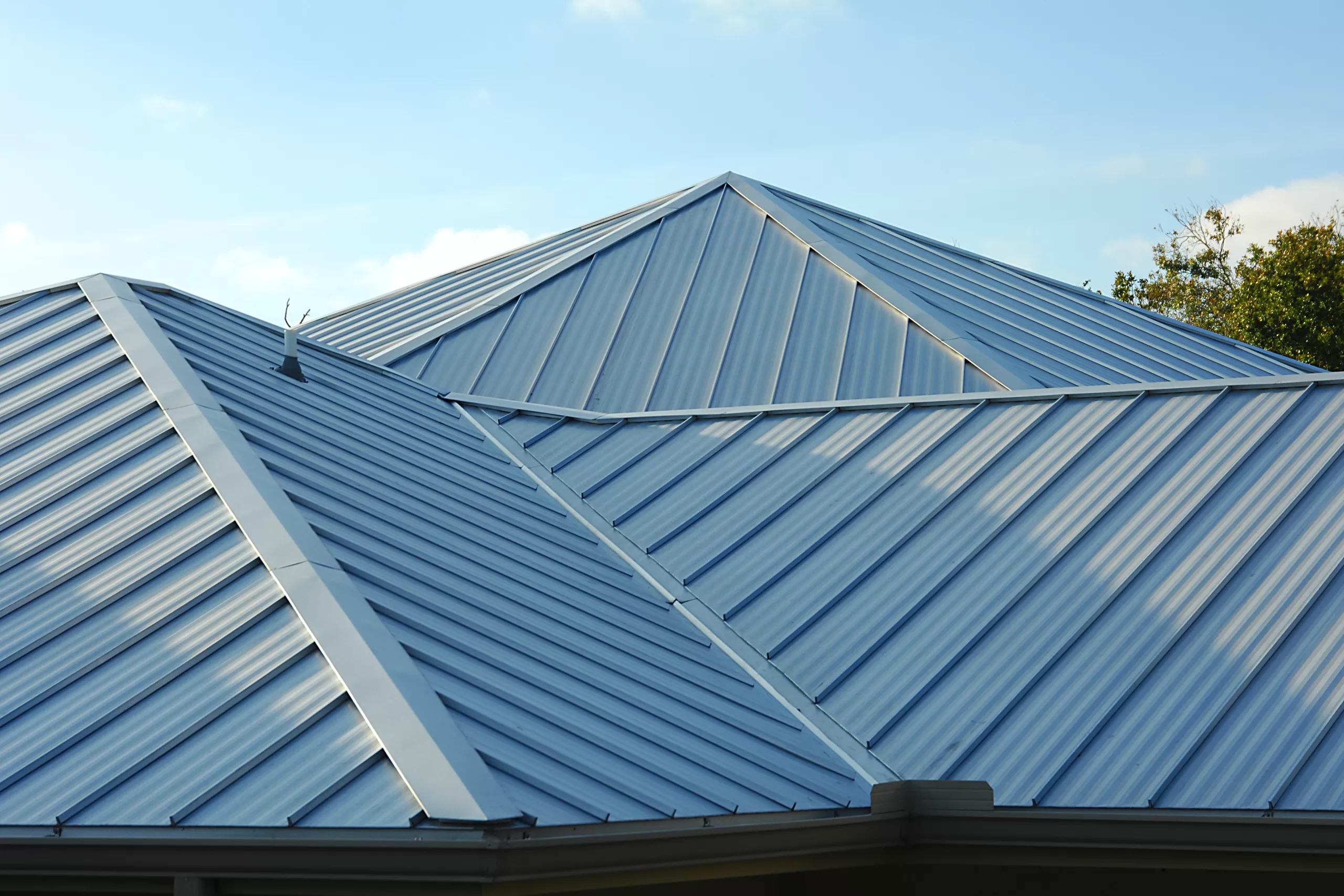
Quick answer: for a true waterfront home on the Chesapeake Bay, the Severn, or the Magothy, aluminum standing seam metal is the best roof you can buy — it simply doesn’t corrode in salt air. For homes near the water but not on it, algae-resistant architectural shingles with stainless or hot-dipped galvanized fasteners handle the salt, humidity, and wind at a fraction of the price. The right answer depends on how close you actually are to brackish water.
We roof waterfront homes from Annapolis to Pasadena every season, and we see the same pattern over and over: coastal roofs don’t fail the way inland roofs do. They fail faster, they fail at the fasteners first, and they fail on the water-facing slope years before the leeward side shows a thing. Understanding how salt air affects roofs is half the battle for homeowners living near the coast — or, in our case, near the Bay. Here’s what salt air, Bay humidity, and open-water wind actually do to a roof in Maryland, and what we install to fight back against salt air damage.
What salt air really does to a roof
Salt spray off brackish water doesn’t stop at the shoreline. Onshore winds carry salt particles hundreds of yards inland, where coastal air settles them on every surface of your roof and goes to work on anything corrosive conditions can eat. The Chesapeake is brackish rather than full-strength ocean salt, so the effects of salt air here are slower than living near the ocean — but they’re the same chemistry, and inland properties two miles from the water never see them at all. Unlike rain, salt residue doesn’t rinse away clean — it concentrates as the moisture evaporates, then reactivates with every humid morning. That’s why coastal environments are the harshest place a roofing material can live, and why deterioration on coastal properties runs years ahead of the same roof inland.
- Fasteners corrode first. The most common failure we find on Bay-front roofs isn’t the shingle or the panel — it’s ordinary electro-galvanized roofing nails and exposed screws rusting through. A corroded fastener backs out, the hole opens, and the leak starts long before the roofing material itself wears out.
- Steel rusts, aluminum doesn’t. Salt attacks the cut edges and any scratch in coated steel roofing. Aluminum forms its own protective oxide layer and shrugs off salt exposure — which is exactly why it’s the marine-industry metal of choice.
- Asphalt ages faster. Constant humidity, salt residue, and unshaded UV off the water work asphalt shingles harder than the same shingle sees two miles inland. We routinely see water-facing slopes age five-plus years ahead of the charts.
- Flashing and accessories corrode too. Salt corrosion doesn’t stop at the nails — drip edge, valley metal, ridge vents, and every other exposed metal components on the roof need marine-grade thinking near the water, or they become the weak link under an otherwise healthy roofing system.
The Bay’s other two weapons: humidity and wind
Salt gets the headlines, but Chesapeake waterfront homes fight on three fronts at once.
Humidity and algae
The air over the Bay, the Severn, and the Magothy stays humid most of the year, and humid Maryland roofs grow Gloeocapsa magma — the algae behind the black streaks you see on so many Anne Arundel County roofs. Streaks are mostly cosmetic, but the same trapped moisture feeds moss and lichen, which are not: they pry shingle edges up and hold water against the roof surface. On any shingle roof near the water we spec algae-resistant (AR) shingles with copper-infused granules as the baseline, not an upgrade.
Open-water wind
Wind coming off open water hits harder than the same storm inland — there’s nothing to slow it down before it reaches your roofline. Nor’easters, summer squall lines, and the occasional derecho drive the repair calls we get from waterfront neighborhoods in Severna Park, Arnold, and the Broadneck peninsula. Wind resistance is a spec, not a hope: architectural shingles rated 110–130 mph with a proper six-nail pattern, or standing seam metal panels rated 140+ mph with concealed clips, are what belong on exposed lots.
The best roofing materials for Chesapeake waterfront homes
| Roofing material | Salt-air performance | Lifespan on the water | Installed cost | Our verdict |
|---|---|---|---|---|
| Aluminum standing seam | Excellent — will not rust in salt air | 40–70 years | ~$10–$16/sq ft ($25,000–$50,000+ typical) | The waterfront gold standard |
| Coated steel standing seam | Good inland, vulnerable at cut edges near brackish water | 40–70 yrs inland; shorter within salt-spray range | ~$10–$16/sq ft | Fine near the water, not on it |
| Algae-resistant architectural shingles | Good with upgraded fasteners; ages faster on water-facing slopes | 25–30 yrs inland; realistically 20–25 on exposed waterfront | ~$4.50–$8/sq ft ($12,000–$25,000 typical) | The smart-money pick near, not on, the water |
| 3-tab shingles | Poor — low wind ratings, fastest aging | 15–20 yrs inland, less on the water | Lowest upfront | We don’t recommend them on the Bay, period |
True waterfront: aluminum standing seam
If your lot touches brackish water — or salt spray reaches your roof on a windy day — aluminum standing seam is what we recommend, full stop. Standing seam metal roofs in aluminum are the corrosion-resistant roofing benchmark for coastal areas: the metal doesn’t rust, the panels interlock against 140+ mph wind, and the concealed-fastener design means there are no exposed screws for salt to attack. It costs 2–2.5× a comparable shingle roof, but on the water it’s the difference between one roof and three. Our Maryland roofing materials guide covers how it compares to everything else we install.
Near the water: algae-resistant architectural shingles
Most “waterfront” homes in Anne Arundel County are actually water-privileged — a few streets back, salt air exposure is modest, but humidity and wind are still real. An asphalt shingle roof might last its full 25–30 years three streets in, where the identical roof on the point gives up five of them. There, algae-resistant architectural shingles are the honest value: 25–30 year class shingles with copper granules to stop the black streaks, high wind ratings, and a price that leaves room in the budget. The critical upgrade isn’t the shingle — it’s everything under and around it, which brings us to fasteners.
The detail nobody talks about: fasteners and flashing
We’ve torn off waterfront roofs where the shingles had ten good years left but the nails were done. Roof fasteners and flashing have to be corrosion-resistant too — the ability to withstand salt has to run through the whole roof system, not just the surface:
- Stainless steel or hot-dipped galvanized steel nails — not the standard electro-galvanized nails that are fine inland. On the water, this cheap upgrade is the single best durability buy on the roof.
- Aluminum or stainless flashing and drip edge — matched to the roof metal to prevent galvanic corrosion, where two dissimilar metals touching in salt air eat each other.
- Sealed, baffled ridge vents — Bay wind drives rain horizontally; standard vents that never leak inland can take on water in a nor’easter.
- Synthetic underlayment and ice-and-water shield — humidity plus freeze-thaw is a Maryland double hit; felt paper has no business on a waterfront roof anymore.
When a coastal roof “fails early,” this layer is usually why. It’s also why two quotes for the same shingle can be honest and still $3,000 apart — ask every contractor exactly what fasteners and flashing metal they’re pricing.
What we see on the Severn, the Magothy, and the Bay
Working from Millersville, most of our waterfront work sits on the Severn and Magothy rivers and the open Bay shore from Gibson Island down through Annapolis. A few local patterns worth knowing:
- Water-facing slopes age first. On inspection we regularly find the south- or east-facing slope toward open water a full condition-grade worse than the leeward slopes. If you’re getting quotes to patch “the bad side,” understand the other side is on the same clock, just a few years behind.
- Severna Park’s mature tree canopy adds an algae accelerant — shade plus humidity keeps roofs damp into the afternoon. Homes there fight streaks and moss harder than open-lot Bay-front homes do. If you’re in that area, our Severna Park roofing page covers how we handle it.
- Historic Annapolis adds an approval layer. Roofing in the Historic District comes with material-approval rules that outrank your preference list — details on our Annapolis roofing page.
- Insurance carriers are paying attention. Some Maryland carriers now ask the roof’s age and material on waterfront renewals. A documented new roof — metal especially — can help at renewal time, but discounts vary by carrier and policy, so confirm with yours.
Maintenance that actually extends a coastal roof’s life
Whatever roofing material is up there now, regular maintenance buys real years in a coastal environment — protecting your roof from salt is mostly about protecting your investment on a schedule. Salt air damage is cumulative: sodium chloride particles settle, concentrate, and corrode quietly until something leaks. The goal of coastal roof maintenance is to interrupt the buildup before deterioration accelerates into a complete roof replacement you didn’t plan for.
- Rinse your roof with fresh water once or twice a year if you’re in the salt-spray zone. A gentle garden-hose rinse from a ladder (never a pressure washer on shingles) washes accumulated salt deposits off panels, flashing, and gutters before they can do their slow work.
- Get a roof inspection every couple of years, and after major storms. On coastal homes we’re looking for early signs of salt damage inland roofs never show: rust blooms at fastener heads, chalking coatings, corroding valley metal, sealant that’s given up. Caught early, these are cheap roof repairs; caught late, they’re decking replacement.
- Keep gutters clear and trees trimmed back. Debris holds damp salt residue against metal edges, and overhanging branches keep humid roofs from drying out — feeding both corrosion and algae at once.
- Apply protective coatings when the finish asks for it. On aging metal, a fresh protective coating restores the sacrificial layer that shields the roof from salt air. It’s a fraction of replacement cost and can extend your roof’s life by a decade.
None of this is exotic — it’s the difference between a coastal roof reaching the top of its lifespan range and giving up premature years at the bottom of it. Coastal homeowners who do the boring stuff simply get more roof life per dollar than the ones who don’t.
How to decide in 60 seconds
- Salt spray can physically reach your roof → aluminum standing seam. Nothing else is playing the same game.
- Water view, but a few streets back → algae-resistant architectural shingles with stainless or hot-dipped fasteners and upgraded flashing.
- Exposed ridge or open-water fetch, any distance → prioritize wind rating and nailing pattern over everything else on the quote.
- Planning to stay 20+ years on the water → the aluminum premium amortizes to roughly shingle money per year of service, without the mid-ownership tear-off.
- Not sure which zone you’re in → that’s literally what a free inspection answers. Salt exposure is a property-by-property fact, not a zip-code fact.
Frequently asked questions
What is the best roof for salt air?
Aluminum — most often as aluminum standing seam panels. Aluminum forms its own protective oxide layer instead of rusting, so salt-laden air that eats coated steel and ordinary fasteners doesn’t touch it. That’s why it’s the standard recommendation for true waterfront homes on the Chesapeake.
How close to the water do you need to worry about salt air?
As a working rule, roofs in coastal zones within about a half mile of brackish water — closer on exposed, windy shorelines — see meaningful salt exposure, and homeowners in coastal areas directly on the water see the most. Near the coast of open ocean the radius is wider; near the ocean, spray simply carries farther than it does on the Bay. Wind direction and tree cover matter as much as distance, which is why we assess it house by house rather than by neighborhood.
For waterfront homes the metal question usually narrows to one system, covered in our guide to standing seam metal roofing in Maryland.
Are metal roofs good for coastal homes?
Aluminum metal roofs are the best coastal option there is: no rust, concealed fasteners, and 140+ mph wind ratings. Coated steel is more of a judgment call near brackish water because cut edges and scratches can corrode — on true waterfront we spec aluminum.
How long do shingles last near the Chesapeake Bay?
Architectural shingles that deliver 25–30 years inland realistically give 20–25 on exposed waterfront lots, with the water-facing slope aging fastest. Algae-resistant shingles, upgraded fasteners, and good attic ventilation protect most of that lifespan; skipping them gives some of it back.
Why do waterfront roofs leak at the nails?
Standard electro-galvanized roofing nails corrode in salt air years before the shingles around them wear out. As the nail rusts, it loosens and the nail hole opens into a leak path. Stainless steel or hot-dipped galvanized fasteners are the fix, and they cost very little at install time.
Do black streaks on a Bay-area roof mean it’s failing?
Usually not — black streaks are almost always Gloeocapsa magma algae feeding on limestone in the shingles, a cosmetic issue our humid Bay air makes common. But streaks plus curling edges, granule loss, or moss is an age story, not an algae story, and worth an inspection.
Get a straight answer for your stretch of shoreline
You don’t need an ocean-town roofer or exotic roofing solutions — you need a coastal roofing contractor who understands the unique challenges of salt, humidity, and wind on brackish Chesapeake water and installs to withstand them by default. That’s how you protect your home for the long haul. Every waterfront roof we quote starts the same way: we look at your actual exposure — distance to water, fetch, wind direction, tree cover — and tell you honestly whether you’re an aluminum house or an AR-shingle house. Sometimes that answer costs us the bigger job; that’s fine. We’re family-owned in Millersville, we roof the Severn, the Magothy, and the Bay shore every season, and we put the right fasteners on every one. MHIC #85703, GAF Certified. Call (443) 233-1119.
Talk to a Maryland roofer who tells it straight
Free inspection, photos of what we actually find, and an honest written estimate — whether the answer is a $600 repair or a new roof.



No comment yet, add your voice below!