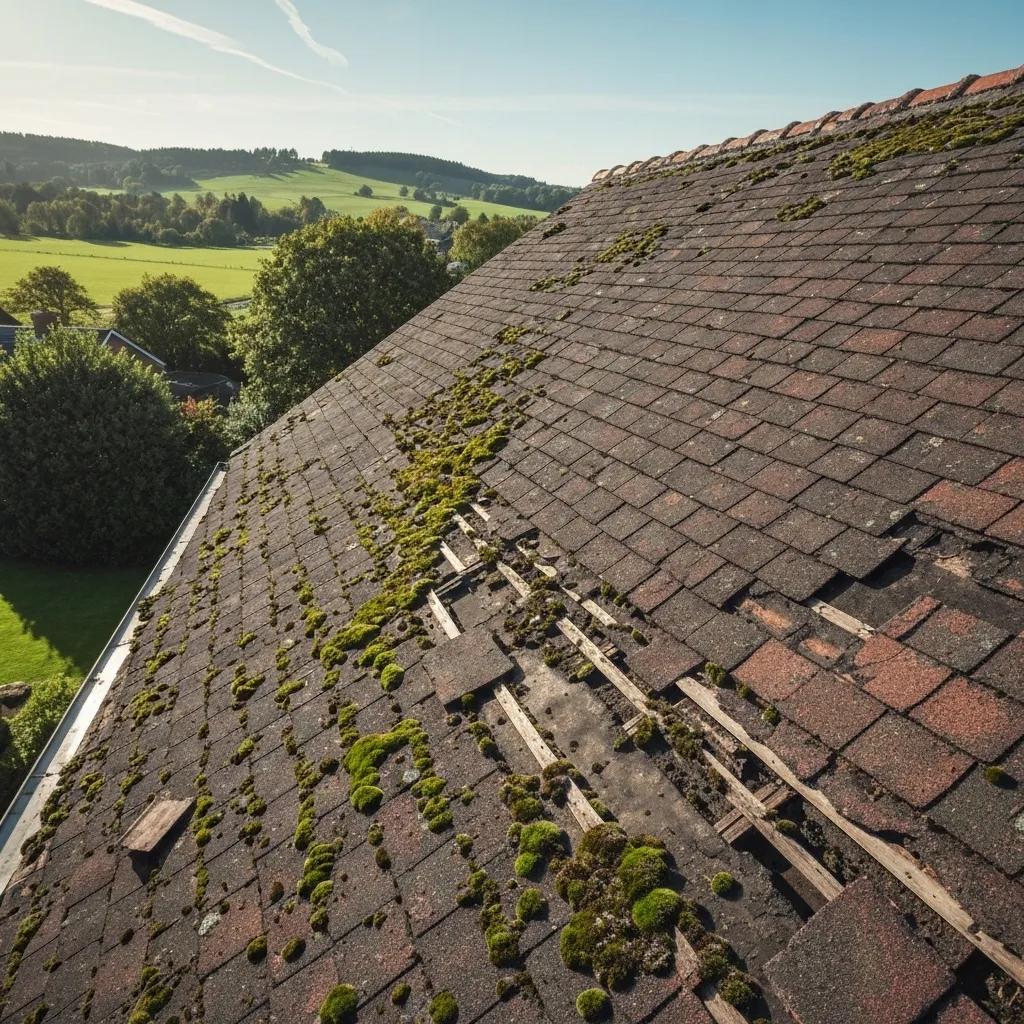
Quick answer: those black streaks on your roof are almost certainly algae — a blue-green algae called Gloeocapsa magma that feeds on the limestone filler in asphalt shingles. It’s mostly cosmetic, it’s everywhere in humid Maryland, and the fix is a low-pressure soft wash — never a pressure washer — followed by algae-resistant shingles or zinc/copper strips if you want the streaks gone for good.
We get this call from a worried homeowner every week, usually phrased as “my roof is rotting” or “my shingles are leaking tar.” It’s neither — those streaks running down your roof are a biology problem, not a shingle failure. Here’s what causes black streaks on roof shingles, why Maryland roofs grow them so aggressively, what removes them without wrecking your shingles, and — the part most roof-cleaning companies won’t tell you — when you see black streaks that are actually a sign that your roof is simply old.
What causes black streaks on roofs?
The culprit is Gloeocapsa magma, an airborne algae that lands on your roof as spores, takes hold on the shingle surface, and feeds on the limestone filler that manufacturers blend into modern asphalt shingles. As the algae colony grows, it builds a dark protective sheath against UV light — that sheath is the black staining you see. The streaks run vertically because rainwater drags the colony down the roof surface, seeding new growth as it goes.
A few things worth knowing about this particular houseguest:
- It’s not mold, mildew, soot, or “tar bleed.” People call it black algae, and the discoloration is indeed caused by algae — the same hardy organism from roof to roof across the entire mid-Atlantic, thriving anywhere humid environments and shade overlap.
- It shows up on the north side first. “Why is it only on the north side of my roof?” is the most common follow-up we get. That slope stays shaded and damp longest, and algae growth loves shade and moisture. Homes under heavy tree canopy get it on every slope.
- It’s mostly cosmetic — at first. Algae streaks cost you curb appeal, not structure; the algae itself doesn’t eat the asphalt, so black algae on roof shingles won’t damage your shingles in the near term. But the dark streaks absorb more heat (which can nudge summer cooling costs), hold moisture against the shingle, and — left alone for years — the colony becomes a foothold for moss and lichen, which genuinely do damage the shingles by prying edges up and pulling granules loose.
Why Maryland roofs streak so badly
Maryland is close to ideal habitat for roof algae, and some of our service area is perfect for it. The Chesapeake’s humidity keeps roof surfaces damp into late morning most of the year, and our humid summers give spores a running start. Then add tree cover: communities like Columbia were deliberately planned around mature tree canopy, and decades later those trees shade roofs deep into the afternoon — beautiful streets, ideal algae real estate. We see the same pattern in Severna Park, Crofton, and every older wooded neighborhood in Howard and Anne Arundel counties. If you’re in one of these areas, streaks aren’t a defect in your roof — they’re the local climate doing what it does. (Our Columbia roofing page covers what that tree canopy means for roofs there.)
What actually removes black streaks (and what destroys your roof)
Soft washing: the right way to clean your roof
The method endorsed by the Asphalt Roofing Manufacturers Association is a soft wash: a low pressure application of a cleaning solution — typically sodium hypochlorite (essentially a diluted bleach mix) with a surfactant — that kills the algae and releases the staining, followed by a gentle rinse. No aggressive scrubbing, no high-pressure spray. Done properly, a professional roof cleaning service will remove algae and the unsightly black streaks without damaging your shingles — no store-bought roof cleaner and garden sprayer required, and results last three to five years in our climate before spores recolonize.
Never pressure wash your roof. Ever.
A pressure washer will absolutely remove black streaks — along with the protective granules that are your shingles’ entire defense against UV. High-pressure cleaning strips granules, voids most shingle warranties, and can shorten a roof’s remaining life by years in a single afternoon. We’ve inspected roofs that were “cleaned” this way twice and needed roof replacement a decade early. If a cleaning process involves the same machine that strips your deck, keep it away from your shingles.
| Method | Removes streaks? | Shingle-safe? | How long it lasts | Typical cost (MD market) |
|---|---|---|---|---|
| Soft wash (pro) | Yes | Yes — ARMA-endorsed method | 3–5 years | ~$300–$700 typical single-family |
| Pressure washing | Yes — plus your granules | No — never on shingles | Until the roof fails early | Cheap now, expensive later |
| Zinc or copper strips | Prevents new streaks (slow fade of old) | Yes, installed correctly | Years — renewable metal | ~$200–$500 installed |
| Algae-resistant (AR) shingles | Prevents streaks from forming at all | N/A — it’s the roof itself | 10+ year algae warranties common | Little to no premium at replacement |
How to keep the streaks from coming back
Zinc or copper strips
A metal strip installed along the roof ridge releases trace zinc or copper ions every time it rains. The runoff washes down the roof surface to inhibit algae growth along the way. It won’t erase existing dark streaks overnight — the old staining fades slowly — but it’s a genuinely effective, low-cost way to prevent black streaks on a roof that still has plenty of life left. Copper outperforms zinc slightly; both work. Installation matters: strips need proper exposure and should be fastened without creating leak paths, which is a one-visit job for a roofer.
Algae-resistant shingles: the permanent fix
Every major manufacturer now makes algae-resistant shingles with copper-infused granules that prevent algae growth from ever establishing — GAF’s StainGuard lines and CertainTeed’s StreakFighter are the two we install most. The copper granules do continuously what a ridge strip does from one location, spread across the whole roof. In Maryland’s climate we consider AR shingles the default spec, not an upgrade: the cost difference for the new shingles at replacement time is minimal, and 10-year-plus algae warranties are now standard on architectural lines. If you’re replacing a roof in a wooded, humid neighborhood and your contractor isn’t quoting AR shingles, ask why.
Trim the shade, clear the gutters
Algae needs moisture more than anything. Cutting back overhanging branches lets slopes dry out by mid-morning, and clean gutters stop damp debris from wicking moisture up under the bottom courses. Neither prevents streaks alone, but both slow recolonization after a cleaning.
When black streaks mean age, not algae
Here’s the honest part. Algae staining is a cosmetic problem on a healthy roof — but sometimes the dark patches you’re seeing aren’t algae at all, and cleaning would be money down the downspout. Get a roof inspection instead of a wash when the streaks come with:
- Bald, dark patches rather than streaks — that’s granule loss exposing the black asphalt mat underneath, an age symptom, not a stain.
- Granules collecting in the gutter — the shingle surface is shedding its armor.
- Curling, cupping, or cracked shingles alongside the discoloration.
- Moss you can grab — moss holds water against the roof and its roots work under shingle edges; by the time it’s established, the shingles beneath are often compromised.
- A roof past 20 years — architectural shingles give Maryland homes 25–30 good years; cleaning a 24-year-old roof buys appearance, not time. Our Maryland roof lifespan guide covers how to read where your roof is on that clock.
The difference matters because the fixes are wildly different in price. Streaks on a 10-year-old roof: a few hundred dollars of soft washing and maybe zinc strips. Granule loss on a 22-year-old roof: you’re roof shopping, and no cleaner can change that. When it’s just localized wear — a slope, a valley, some flashing — a roof repair is often the honest middle answer, and we’ll tell you which one you’re looking at.
Frequently asked questions
What are the black streaks on my roof?
Almost always Gloeocapsa magma algae — a blue-green algae that feeds on the limestone filler in asphalt shingles and builds a dark UV-protective coating as it spreads. It’s not mold, tar, or rot, and it’s extremely common on Maryland’s humid, tree-shaded streets.
Do black streaks damage roof shingles?
Not directly, and not quickly. The algae itself is cosmetic, though the dark streaks absorb more heat and hold moisture. The real risk is time: established algae becomes a base for moss and lichen, which do physically damage shingles. Cleaning it off every few years, or preventing it outright, keeps the problem cosmetic.
How do I remove black streaks from my roof?
A low-pressure soft wash with a sodium hypochlorite solution — the method the Asphalt Roofing Manufacturers Association endorses. It kills the algae and lifts the staining without stripping granules. Never pressure wash roof shingles; the granule loss costs you far more roof life than the algae ever would.
Will bleach hurt my roof or plants?
The diluted bleach mix used in a proper soft wash is shingle-safe at correct concentrations. Landscaping below is the real concern — good crews pre-wet and rinse plants, bag downspouts, and control overspray. It’s a reason this is a professional job rather than a Saturday project.
Do zinc strips really work for roof algae?
Yes — rain washing over a zinc or copper strip at the ridge carries metal ions down the roof and inhibits algae growth. They’re better at preventing new streaks than erasing old ones, so the usual play is a soft wash first, strips after. On a roof due for replacement anyway, algae-resistant shingles make strips unnecessary.
Are black streaks a sign I need a new roof?
Usually not — streaks alone are cosmetic. But dark patches with granule loss, curling shingles, gutter grit, or established moss on a 20-plus-year-old roof are age symptoms wearing an algae costume. That’s an inspection call, not a cleaning call.
Not sure if it’s algae or age? Ask the people who don’t sell washes
We’re a roofing crew, not a roof-cleaning service — which makes us a useful second opinion, because we make nothing on a wash. If the streaks on your roof are just algae, we’ll say so and you can spend a few hundred dollars, not fifteen thousand. If what you’re actually seeing is a roof telling you it’s tired, we’ll show you the evidence up close and walk you through repair versus replacement honestly. Family-owned in Millersville, serving Anne Arundel, Howard, and the surrounding counties. MHIC #85703, GAF Certified. Call (443) 233-1119.
Talk to a Maryland roofer who tells it straight
Free inspection, photos of what we actually find, and an honest written estimate — whether the answer is a $600 repair or a new roof.




No comment yet, add your voice below!