Quick answer: a standing seam metal roof is a system of vertical metal roofing panels joined by raised seams that lock together and hide every fastener from the weather. In Maryland it runs about $10–$16 per square foot installed — $25,000–$50,000+ on a typical home — and delivers 40–70 years. It’s the best roof most homeowners will ever buy, and it is genuinely the wrong buy for some of them. Here’s the whole picture.
We install standing seam metal roof systems alongside architectural asphalt shingles every season, so we don’t need to sell you on either one. Standing seam is the most popular metal roofing choice for houses by a wide margin — of all the types of metal roofing on the market, it’s the one engineered for homes rather than adapted to them. This is the kitchen-table version of what we tell Maryland homeowners who ask about metal: what the panels actually are, which profile and gauge to spec, what the finish warranty fine print means, and — the section most metal roofing websites skip — who shouldn’t buy one.
What a standing seam metal roof actually is
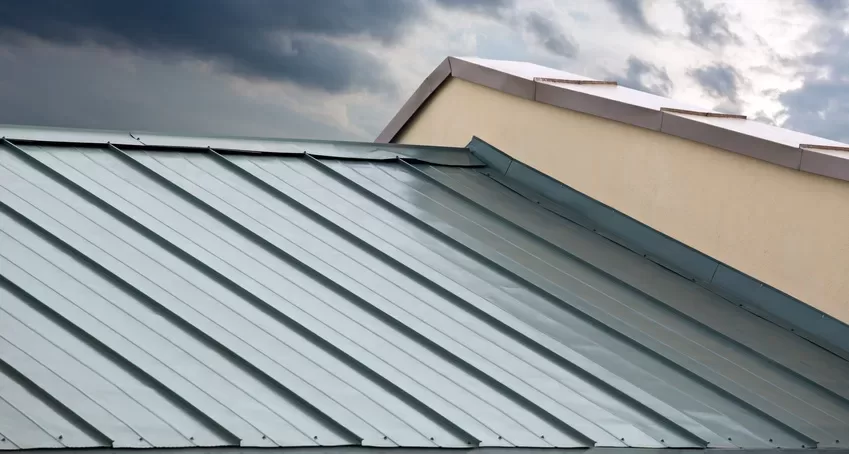
Picture long, flat metal panels running from ridge to eave, with each seam standing up an inch or more where neighboring roof panels interlock. The panels attach to the roof deck with concealed fasteners — clips hidden inside the seam — so there’s no exposed screw head anywhere on the roof surface for water to find or for the sun to loosen. That single design decision drives nearly everything these seam systems do well: weathertightness, weather resistance in wind, durability, and clean looks.
That’s also the difference between standing seam and the cheaper “metal roof” your neighbor may have on a barn or garage. Corrugated and ribbed panel systems use exposed fasteners — hundreds of gasketed screws driven through the metal face. Every one of those gaskets bakes, shrinks, and eventually weeps. Exposed-fastener metal is fine for outbuildings; on a house you plan to keep for decades, concealed fasteners are the entire point of going metal.
Standing seam profiles: snap-lock vs. mechanically seamed
The most popular standing seam metal profiles differ mainly in how the seam closes. The standing seam panel features that matter to a homeowner — concealed clips, panel width, seam height — stay similar across brands; the seam type decides where each profile belongs.
| Profile | How the seam works | Best for | Notes |
|---|---|---|---|
| Snap-lock | Snap-together seams — one panel edge clicks over the other, clipped to the deck | Most Maryland homes, roof pitch 3:12 and up | Quick installation, easier repairs, the residential default |
| Mechanically seamed | Seams folded shut with a seaming tool (single or double lock) | Low-slope sections, coastal/high-wind exposure, commercial roofing | Best weathertightness available; more labor, more cost |
| Batten seam | Panels capped by a batten over the joint | Historic and traditional architecture | The classic look on older Annapolis and Frederick homes |
| Exposed-fastener ribbed panel | Screws through the panel face | Barns, sheds, budget projects | Not standing seam — we don’t recommend it on houses |
Gauge, metal, and finish: the spec sheet that matters
Gauge (thickness)
A residential standing seam metal roofing panel comes mostly in 24 gauge or 26 gauge steel. We spec 24 gauge for Maryland homes: it resists oil-canning (the visible waviness on flat panel faces), handles thermal expansion and contraction better, and shrugs off the hail and branch strikes our storms deliver. The savings on 26 gauge is small; the difference in how the roof looks and lasts is not.
The metal itself
Most panels are galvalume-coated steel — steel wrapped in an aluminum-zinc alloy that resists rust for decades. On waterfront homes near the Chesapeake we switch to aluminum, which can’t rust at all in salt air. Copper and zinc exist for landmark projects and budgets to match.
Finish: insist on PVDF (Kynar 500)
The paint system is where good quotes and cheap quotes quietly diverge. PVDF finishes — sold under the Kynar 500 name — are the standard worth insisting on: they hold color and gloss for 30+ years against UV. The cheaper alternative, SMP (silicone-modified polyester), chalks and fades noticeably faster, which matters on a roof designed to outlive its own color trend. If two quotes are far apart, check the gauge and the finish before assuming someone’s being generous.
What standing seam costs in Maryland
Using the same market ranges we quote from: standing seam runs roughly $10–$16 per square foot installed here, which puts most full Maryland homes between $25,000 and $50,000+ — typically 2–2.5× a comparable architectural shingle roof. Roof complexity moves metal pricing harder than it moves shingle pricing: hips, valleys, and dormers multiply panel fabrication and trim labor fast, so a simple gable colonial prices at the friendly end and a complex roofline doesn’t. For the full apples-to-apples math against shingles — including cost per year of service, where the two are surprisingly close — see our metal roof vs. shingles comparison, and our Maryland roof replacement cost guide for how these numbers fit the wider market.
What you’re buying for the premium: a long-lasting, high-performance, 40–70 year roof system that’s energy-efficient (reflective finishes help energy efficiency by trimming summer cooling loads), low maintenance, fully recyclable at end of life, carries a Class A fire rating for fire resistance, and — because the clip system lets panels float — handles Maryland’s freeze-thaw expansion and contraction cycles without working fasteners loose the way through-screwed metal does. It’s the same reason metal roofing systems dominate on homes and commercial buildings alike wherever owners plan to keep the building for decades.
Details that separate a great install from an expensive mistake
- Solid decking and underlayment. Residential standing seam belongs on a solid substrate — plywood or OSB decking with a high-temperature synthetic underlayment and ice-and-water shield at eaves and valleys. Panels over open framing is barn construction, and it’s also why barn roofs drum in the rain and houses don’t.
- Snow retention is not optional in Maryland. Metal sheds snow in sheets — an entire slope’s worth can release at once onto a doorway, a deck, or a gutter run. Every standing seam roof we install here gets engineered snow retention: clamp-on snow guards or rail systems that grip the seams (never anything screwed through the panel face) above entries, walkways, and gutters.
- Trim and flashing are half the job. Eave, rake, ridge, and penetration details are hand-formed metalwork. A beautiful field of panels with rushed flashing is where “metal roofs leak” stories actually come from.
- Solar-ready by design. Solar panels clamp directly to the seams with zero roof penetrations — a real advantage if panels are anywhere in your ten-year plan, and one more reason not to put solar on a roof that will need replacing before the panels do.
- Crew experience matters more than brand. Panel brands are more alike than different; installation quality is not. Ask specifically how many standing seam roofs the crew — not the company — has installed, and ask to drive past two of them.
Who should NOT buy a standing seam metal roof
We’d rather lose the bigger job than install the wrong roof. Skip standing seam if:
- You’re selling within 10–15 years. You’ll pay the full premium and collect only part of it back at resale. An architectural shingle roof protects the house just as dry for less than half the check.
- The budget only stretches by cutting corners. A 26-gauge, SMP-finished, bargain-crew metal roof is a worse buy than a properly installed shingle roof at the same price. If the quote only works by thinning the spec, buy the excellent shingle roof instead — our Maryland roofing materials guide walks through every option honestly.
- Your HOA hasn’t said yes. Plenty of Maryland covenant communities require shingle-look roofs or a formal approval fight. Confirm before you fall in love; approvals can take months.
- Your roofline is extremely cut-up. On some complex roofs the metal premium balloons past 3× shingles. At that ratio, the math rarely survives.
- You expect it to look factory-new forever. Metal can oil-can slightly on wide flat faces, hail can leave cosmetic dents, and finishes weather slowly. It will outlast everything on the block — it won’t stay showroom-perfect for 50 years.
Frequently asked questions
What are the downsides of a standing seam metal roof?
Upfront cost (2–2.5× shingles), fewer qualified installers, possible oil-canning on wide flat panels, cosmetic hail dents, and HOA restrictions in some Maryland communities. Snow-shedding is also real — it’s why we install snow guards over entries and gutters as standard practice.
Is a standing seam metal roof worth the extra cost?
If you’ll own the home 20+ years, usually yes: one 40–70 year metal roof typically outlasts two shingle roofs, so the cost per year of service lands close to shingles. Selling sooner than that, the premium rarely comes back at closing.
How long does a standing seam metal roof last?
In Maryland we tell homeowners 40–70 years for a properly installed system — 24 gauge steel or aluminum, PVDF finish, quality underlayment. Paint warranties typically run 30–40 years; the panels themselves keep working long after the gloss fades.
What is the difference between snap-lock and mechanically seamed panels?
Snap-lock panels have snap-together seams that click into place — faster to install, easier to repair, and right for most Maryland homes with a 3:12 or steeper roof pitch. Mechanically seamed panels get folded shut with a seaming tool for maximum weathertightness — the spec for low slopes and severe exposure.
Can you install standing seam over existing shingles?
Code sometimes allows it, but we almost always recommend tear-off first: it exposes decking problems while they’re cheap to fix, keeps the panel field flat, and protects the manufacturer’s warranty. A 50-year roof shouldn’t be built over a hidden problem.
Are metal roofs loud when it rains?
Not on a house. Residential standing seam installs over solid decking and underlayment, which absorbs the sound — rain noise is comparable to a shingle roof. The rain-on-a-tin-roof racket comes from panels over open framing, barn-style.
Get a real number for your actual roof
The honest way to decide on standing seam is with two quotes for your specific house — a metal option and an architectural shingle option, specced properly, side by side. We’ll measure, price both, tell you which one the math favors for your timeline, and put the full specification in writing: gauge, finish, underlayment, snow retention. Family-owned in Millersville, serving Anne Arundel, Howard, Montgomery, Frederick, and Baltimore counties. MHIC #85703, GAF Certified. Call (443) 233-1119.

Talk to a Maryland roofer who tells it straight
Free inspection, photos of what we actually find, and an honest written estimate — whether the answer is a $600 repair or a new roof.




No comment yet, add your voice below!