Quick answer: if your Maryland home sits in an HOA, a planned community like Columbia, or a historic district, you very likely need architectural approval before your roof replacement starts — and approval timelines are measured in weeks, not days. The single most expensive HOA mistake we see is signing a roofing contract, scheduling the crew, and then discovering the shingle color needs committee sign-off.
We replace roofs across Anne Arundel, Howard, Montgomery, Frederick, and Baltimore counties, which means we deal with everything from Columbia Association covenants to Annapolis historic-district review boards every season. Here’s how the approval process actually works, what committees care about, and how we handle the paperwork so a volunteer committee’s meeting calendar doesn’t leave you living under a tarp.
Why your HOA cares about your roof at all
Roofs are the biggest visible surface on your house, and homeowners association covenants exist to keep the neighborhood looking coherent and protect property values — that’s the deal everyone signed at closing, whether they read it or not. Most Maryland HOA governing documents give an architectural review committee (you’ll see it called the ARC, ARB, or covenant committee) authority over exterior modifications, and a full roof replacement is almost always on the list. Some communities also regulate visible roof repairs if the new shingles won’t match the old ones. Depending on how your community is run, the application may go to the committee directly, to the HOA board, or through an HOA management company that administers the paperwork.
One important distinction up front: HOA approval and a county permit are two separate gates. The HOA governs appearance under your community’s covenants; the county governs safety under the building code. Getting one doesn’t get you the other — our Maryland roofing permits guide covers the county side, and this article covers the committee side. A roof in Columbia or a Frederick historic district may need both.
How the typical Maryland HOA approval process works
Step 1 — Read your covenant before you fall in love with a roof
Your governing documents (covenants/CC&Rs plus any published architectural guidelines) spell out what needs approval and what’s pre-approved. Many Maryland communities publish an approved shingle palette — specific manufacturers and colors that sail through. Every community’s rules differ, so check your covenant and current guidelines first; what your neighbor got approved in 2019 may not reflect today’s palette.
Step 2 — Submit the application with the exhibits committees actually want
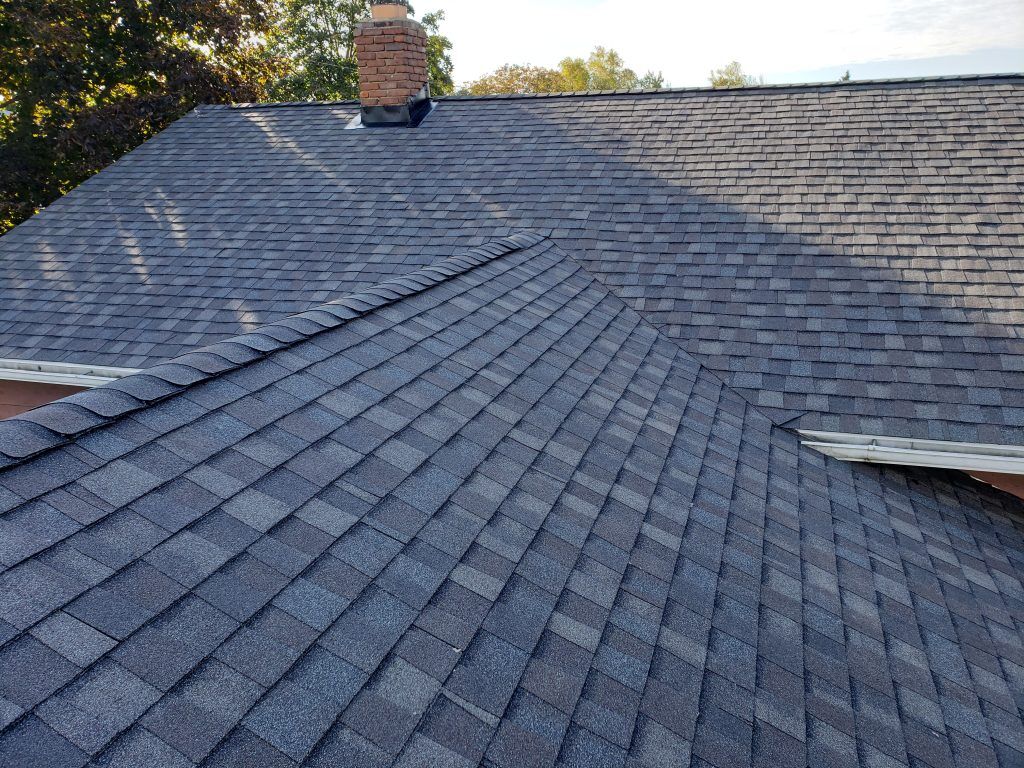
A complete application typically includes the application form, the product spec sheet, the manufacturer’s color name and a color sample or photo, and sometimes a photo of the existing roof and the contractor’s information. Incomplete applications are the number-one cause of delay — a committee that meets monthly and tables your application for a missing color sample just cost you four weeks.
Step 3 — Wait out the review window
Most Maryland HOA guidelines give the committee a defined review window — commonly somewhere between two weeks and sixty days depending on the community. Volunteer committees often meet monthly, so real-world approval time is usually two to six weeks. Plan the project around that: like-for-like replacements in an approved color move fastest; a material change (say, shingles to metal) can take a cycle or two of questions.
Step 4 — Get the approval in writing and keep it
Never start on a verbal “should be fine” from a board member. Written approval protects you if the committee’s membership changes, a neighbor complains, or you sell the house and the buyer’s title review asks for records of exterior changes.
If the HOA denies your application
A denial usually comes with a reason — wrong color, non-approved material, incomplete exhibits — and most governing documents provide an appeal or resubmission path. In practice, the fastest fix is a conversation: find out what the committee will approve and resubmit with that. Fighting a denial on principle takes months; adjusting a shingle color takes a week.
| Scenario | Approval usually needed? | Typical timeline we see |
|---|---|---|
| Same material, same/approved color (like-for-like) | Often yes, but streamlined — some communities pre-approve palettes | Days to ~2 weeks |
| Same material, new color | Yes in most covenant communities | 2–4 weeks |
| Material change (e.g., shingles → standing seam metal) | Yes, with product samples and sometimes neighbor input | 4–8+ weeks |
| Historic district (Frederick, Annapolis) | Yes — city preservation commission review, separate from any HOA | Several weeks to a few months for non-standard materials |
| Emergency repair after storm damage | Temporary protection generally allowed; permanent work still needs approval | Tarp now, application in parallel |
Columbia Association covenants: the Howard County special case
Columbia isn’t a typical HOA — it’s a planned community where the Columbia Association and each of the ten villages enforce covenants, and exterior alteration applications generally run through your village architectural committee. If you own in Wilde Lake, Harper’s Choice, Owen Brown, or any other village, the covenant advisor at your village community association is the right first call, because guidelines and application forms vary village to village.
What we consistently see in Columbia: committees care most about color harmony with the original palette of the neighborhood, and like-for-like architectural shingle replacements in earth-tone colors move through smoothly. Where homeowners get stuck is assuming the process is a rubber stamp and scheduling the crew first. Columbia’s covenant enforcement is real — an unapproved alteration can follow the property until it’s resolved. We handle enough roofs in Columbia that preparing a village application packet is a normal part of the job for us, not an exotic request.
Historic districts: Frederick, Annapolis, and stricter rules
Historic-district review is a different animal from HOA review — it’s a government process, run by a city preservation commission, and it can regulate materials in a way an HOA usually doesn’t. In downtown Frederick’s historic district, exterior work visible from the public way generally needs approval from the city’s Historic Preservation Commission before a permit issues, and the commission reviews material appropriateness — standing-seam metal, slate, and architectural shingles each get judged against the building’s character. Annapolis runs a comparable process through its Historic Preservation Commission for the colonial district.
Practical notes from the roofs we’ve done in and around these districts:
- In-kind replacement is the fast lane. Replacing failing material with the same material and profile is the easiest case to approve — sometimes administratively, without a full hearing.
- Material substitutions need a case. Swapping slate for architectural shingles, or asphalt for metal, typically goes to the commission with product samples. Build an extra month into the plan.
- Rear slopes and visibility matter. Work not visible from the street is often reviewed more leniently. A good application uses that.
- Rules and fees vary by city and change over time — confirm current requirements with the city’s preservation office before committing to a material.
How we handle the paperwork with you
Honest version: the homeowner usually has to be the applicant — covenants and preservation boards deal with the property owner. But there’s no reason you should be assembling roofing spec sheets alone at the kitchen table. On HOA and historic-district jobs we prepare the exhibits that committees ask for: manufacturer spec sheets, exact color names, photos of the existing roof, and a clear scope description. If the committee has questions about roofing materials or installation details, we answer them directly. And we won’t schedule your tear-off until the approval is in writing — a crew showing up before sign-off helps nobody.
One more piece of straight talk: if your covenant restricts you to a shingle look, don’t fight a six-month battle for a metal roof unless you genuinely love the house long-term. Modern architectural shingles in an approved color protect the house just as well, and the approval takes weeks instead of seasons.
What happens if you skip approval
Communities enforce covenants with escalating pressure: a violation letter, fines where the documents allow them, and ultimately legal action that can force modification — in the worst cases, homeowners have been made to redo non-conforming work at their own expense. Replacing your roof without HOA approval also surfaces at resale, when the buyer’s paperwork asks whether alterations were approved. Against that downside, a few weeks of committee patience is cheap. If a storm forces your hand, tarp and protect the house immediately (temporary protection is allowed essentially everywhere), and run the permanent-repair application in parallel.
Frequently asked questions
Do I need HOA approval to replace my roof?
In most Maryland covenant communities, yes — a full roof replacement is an exterior alteration, even like-for-like. Some communities streamline or pre-approve identical replacements in approved colors. Your covenants and architectural guidelines are the authority, so check them before signing a contract.
How long does HOA roof approval take?
Commonly two to six weeks in the Maryland communities we work in — driven mostly by how often the committee meets and whether your application is complete. Material changes and historic-district reviews can run longer. Build the wait into your project timeline rather than hoping around it.
Can my HOA dictate my roof color or material?
Generally yes, if the governing documents give the architectural committee that authority — that’s the covenant you accepted at purchase. Many Maryland communities publish approved shingle palettes. State and federal law carve out limited exceptions (solar panels are the well-known example), but for shingle color and material, the covenant usually controls.
What does the Columbia Association require for a new roof?
In Columbia, exterior alteration applications generally go through your village’s architectural or covenant committee, and requirements vary by village. Expect to submit an application with the product, color, and scope identified. Contact your village covenant advisor for the current form and guidelines before scheduling work.
Do historic districts in Maryland restrict roofing materials?
Yes — city preservation commissions in places like Frederick and Annapolis review exterior work visible from public ways and can require materials appropriate to the building’s character. In-kind replacement is usually straightforward; material substitutions take longer and need supporting exhibits. Confirm current rules with the city’s preservation office.
What if my roof is leaking and I can’t wait for approval?
Protect the house now — emergency repairs and tarping are allowed in essentially every community and district — then submit the application for the permanent work in parallel. Document the damage with photos. No committee expects you to let water run through your ceilings while they schedule a meeting.
Planning a roof in an HOA or historic district?
Tell us the community and we’ll tell you what the approval path looks like before you commit to anything — including whether your preferred color is likely to clear the committee on the first pass. We’ll prepare the spec sheets and exhibits, answer the committee’s questions, and hold scheduling until the approval is in writing. Family-owned, GAF Certified, MHIC #85703. Call (443) 233-1119.

Talk to a Maryland roofer who tells it straight
Free inspection, photos of what we actually find, and an honest written estimate — whether the answer is a $600 repair or a new roof.




No comment yet, add your voice below!