
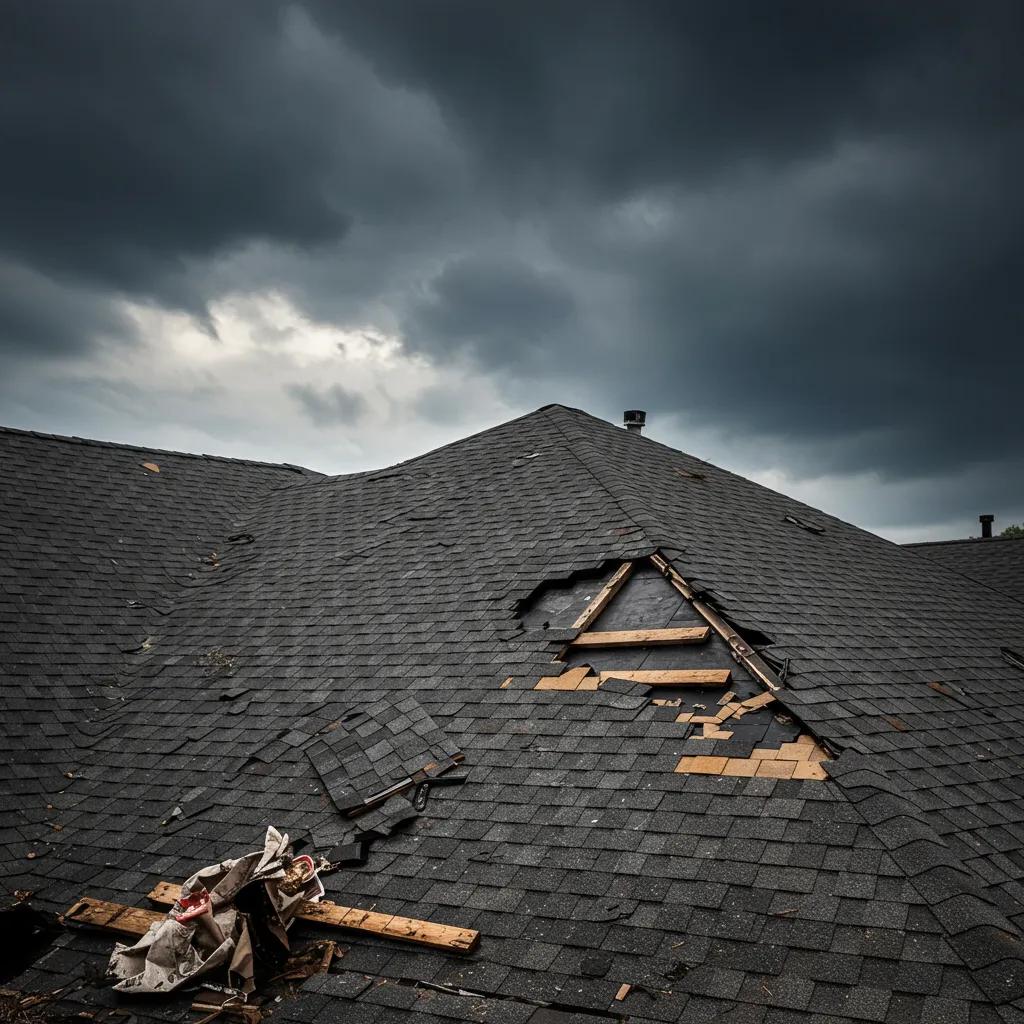
Quick answer: real hail damage on a roof looks like soft dark “bruises” where granules got knocked off asphalt shingles, random circular impact marks or dents on metal vents and flashing, and — after wind — creased or missing shingles. It does not look dramatic from the ground, which is why so much of it gets missed until the roof leaks. We inspect roofs across Anne Arundel, Howard, and Montgomery counties after every hailstorm, and the honest truth is that maybe half the “hail damage” we’re called about is actually something else — and a good chunk of real roof damage from hail goes unnoticed for years.
This guide shows you what genuine hail damage to your roof actually looks like, what’s just cosmetic, and how it connects to an insurance claim — so a homeowner can look at the evidence with clear eyes before anyone starts talking about a new roof.
Maryland gets more hail than people think
We’re not Texas or Colorado, but central Maryland sees damaging hailstorms most years — usually embedded in the summer thunderstorm lines and derechos that roll across the region, occasionally in spring supercells. Hailstones an inch across (quarter-sized) are where shingle damage typically starts; the Insurance Institute for Business & Home Safety (IBHS) impact research is the standard reference here, and it’s why some carriers discount premiums for Class 4 impact-resistant shingles designed specifically for hail protection. Smaller pea-sized hail usually just scuffs — but pair it with 60 mph wind, which Maryland absolutely gets, and even modest hail arrives at an angle with enough energy to cause damage. Wind-driven hail can damage your roof even when the stones on the lawn look harmless.
The wind matters as much as the hail. Most Maryland “hail claims” we see are really combined roof storm damage: hail bruising on one or two slopes (the direction the storm came from) plus wind-creased and lifted shingles along ridges and edges.
What real hail damage looks like, material by material
| Roof material | Real hail damage looks like… | Often confused with… |
|---|---|---|
| Asphalt shingles | Random dark spots where granules are knocked away (“bruises”); the mat underneath feels soft, like a bruised apple; sometimes the black fiberglass mat is exposed. Fresh hits look shiny-black. | Blistering (manufacturing/heat — pops with hard edges), normal granule loss from age (even, in gutters, not random spots) |
| Wind-damaged shingles | Horizontal creases across tabs where the shingle folded back and re-settled; torn or fully missing shingles; lifted edges that no longer seal down. | Curling from age (edges curl uniformly across the whole roof, not in storm-path patterns) |
| Metal roof & metal components | Soft round dents — check vents, flashing, and ridge caps first. On a standing seam metal roof, dents are usually cosmetic; the panel still sheds water. | Foot traffic dents from a previous contractor or satellite installer |
| Gutters, downspouts & siding | Dings and dents on the top of gutters and downspouts, dented window wraps, cracked vinyl siding on the storm-facing side of the exterior of your home. | Ladder damage, lawn-equipment impacts near ground level |
The soft-metal test
Adjusters and roofers both start with the “soft metals” because they can’t lie: aluminum vents, flashing, and gutter tops take impact marks or dents at hail sizes that may or may not hurt shingles. If your soft metals are clean, widespread shingle damage from that storm is unlikely. If they’re peppered with dents, the shingles earned a close inspection — that’s exactly how we identify hail damage on a roof without guessing. Every legitimate roof hail damage inspection starts with the metals, and once you know how to identify that pattern, the door-knocker pitches get much easier to judge.
Why bruising matters even when it doesn’t leak
A hail bruise breaks the bond between granules and mat. The shingle keeps shedding water for now, but that spot now ages on fast-forward — UV eats the exposed asphalt, the mat cracks, and two or three Maryland freeze-thaw winters later the leak — and the interior water damage that comes with it — shows up. That’s why even minor roof damage from a verified hailstorm is worth documenting immediately, and why hail damage on your roof matters even when the ceiling is bone dry: hail damage claims are about the storm date, and the clock on filing starts at the storm, not at the eventual leak.
What hail damage is NOT
- Cosmetic scuffs and granule dust. Pea-sized hail scouring loose granules off an older roof is normal wear and tear accelerating, not a damaged roof. An honest roofing professional will tell you the difference; a storm chaser won’t.
- Blisters. Heat blisters pop open with sharp, crisp edges and no soft bruise under them. Hail hits are dented, soft, and random.
- Aging that predates the storm. Cracking, uniform curling, and moss don’t happen in one afternoon. Carriers know this — claiming wear and tear as hail is how legitimate claims get poisoned.
- Every dent on a metal roof. Cosmetic denting on metal often isn’t covered at all — many policies carry a cosmetic-damage exclusion for exactly this. Function, not appearance, is the insurance coverage question: a panel dented by hail that still sheds water wasn’t functionally damaged by hail in your carrier’s eyes. Ask your carrier what your policy says.
What to do after a hailstorm hits your area
- Check the ground and soft metals first. Dented gutters and downspouts, shredded leaves, dinged AC fins, damage to your home’s window screens — these ground-level signs of hail damage tell you whether the storm had real energy. This is what to look for after a storm before anyone climbs anything.
- Photograph everything, with dates. Visible damage, hailstones next to a coin for scale if they’re still on the ground, the works. Documentation beats memory.
- Stay off the roof. Bruises are hard to see and easy to step on; a post-storm roof is slick with loose granules. Have a professional roofing contractor inspect your roof — we do it from the roof, photograph every slope, and tell you honestly whether what’s up there is hail damage or just age. If a storm opened an actual hole or active leak, our same-day emergency roof repair crew tarps it first and documents everything for the claim.
- Be careful with door-knockers. After every Maryland hailstorm, out-of-state crews canvass neighborhoods promising free roofs. Some are legit; many vanish before warranty season. Local roofing companies with an MHIC license and a Maryland address will still be here in five years (ours is #85703).
- Then decide about insurance — with evidence in hand. If the inspection finds real, widespread damage, that’s what your policy exists for. If it finds scuffs, filing burns a claim slot on your record for nothing.
Hail damage and your insurance claim
Is hail damage covered by insurance? Generally yes — hail is a named peril on most homeowners insurance policies, so standard home insurance will cover hail damage that genuinely compromises the roof. But three honest caveats before you contact your insurance company, and every one of them varies by policy and carrier, so confirm your own insurance information:
- Deductibles are shifting. Some Maryland policies now apply a separate wind/hail deductible — often a percentage of your home’s insured value rather than a flat $1,000–$2,500. Know yours before you file a claim; it changes the math on whether repairing hail damage out of pocket is smarter.
- The amount of damage drives the repair or replace decision. Scattered hits on one slope may mean a repair; widespread bruising across multiple slopes — real structural damage caused by the hailstorm — usually argues for roof replacement, especially when discontinued shingles can’t be matched. Whether your policy pays replacement cost or depreciated actual cash value makes a bigger dollar difference than the type of damage itself.
- The storm date is everything. Claims for hail damage get checked against weather records, and most policies set a filing window. Insurance claims filed a year after the hailstorm, once the leak finally appears, are much harder conversations with the insurance representative.
We wrote a full walkthrough of the claim process — documentation order, what (not) to say to your adjuster, and when a claim isn’t worth filing — in our Maryland storm damage insurance claim guide. Short version: describe the type of roof damage accurately, never exaggerate, and have your roofer at the adjuster meeting.
Frequently asked questions
What does hail damage look like on a roof?
On asphalt shingles: random dark bruises where granules were knocked off, soft to the touch, sometimes with the black mat showing through. On metal: round dents, most visible on vents and flashing. On wood or slate: fresh splits and clean chips. If someone shows you damage that’s perfectly uniform or only along walkways, be skeptical — that’s rarely what hail damage on a roof looks like.
What size hail damages a roof?
Quarter-sized (1 inch) hail is the common threshold where asphalt shingles start taking real damage; golf-ball hail (1.75 inches) does real damage to a roof of almost any type. Smaller hailstones driven by strong wind can still cause significant damage on older shingles — brittle, aged roofs are far more susceptible to hail than new ones, so age and wind speed matter as much as stone size.
How can I tell hail damage from normal wear and tear?
Pattern and texture. Hail damage presents differently than aging: it’s random within a slope, concentrated on the storm-facing side, and the bruises feel soft underneath. Wear shows up evenly across the whole roof — uniform granule loss, curling edges everywhere, granules accumulating in the gutter over years rather than appearing after one storm.
Is hail damage on a roof covered by homeowners insurance?
Usually yes — hail is a covered peril on most policies. The catches: wind/hail deductibles can be percentage-based, purely cosmetic damage (especially dents on metal) may be excluded, and you must file within your policy’s window of the storm date. Does homeowners insurance cover hail every time? No — coverage depends on your specific policy, so read it or ask your agent.
Should I replace my roof after hail damage?
Only if the damage justifies it. Scattered bruising on one slope is often a repair; widespread bruising across the roof, exposed mat, or damage on a roof that was already near end-of-life usually points to replacement. Get the repair-or-replace call in writing from a roofer who isn’t paid more for the bigger answer — we’ll tell you straight either way.
How long after hail damage can I file a claim?
Most policies require prompt notice and many set a specific window — commonly one year from the storm, but it varies by carrier and policy. Practically: get the roof inspected within days of a hailstorm and file promptly if the damage is real. Waiting until the leak appears makes everything harder to prove.
Not sure what that storm did to your home’s roof? Ask us — we’ll tell you straight
Half our post-storm inspections end with “your roof is fine,” and we’re glad to say it — a free honest answer today beats a bad claim or an unnecessary roof. If the hail was real, you’ll get slope-by-slope photos, a written scope, and a crew that will stand next to your adjuster on the driveway. Serving Anne Arundel, Howard, Montgomery, Frederick, and Baltimore counties. Family-owned, GAF Certified, MHIC #85703. Call (443) 233-1119.

Talk to a Maryland roofer who tells it straight
Free inspection, photos of what we actually find, and an honest written estimate — whether the answer is a $600 repair or a new roof.




No comment yet, add your voice below!