
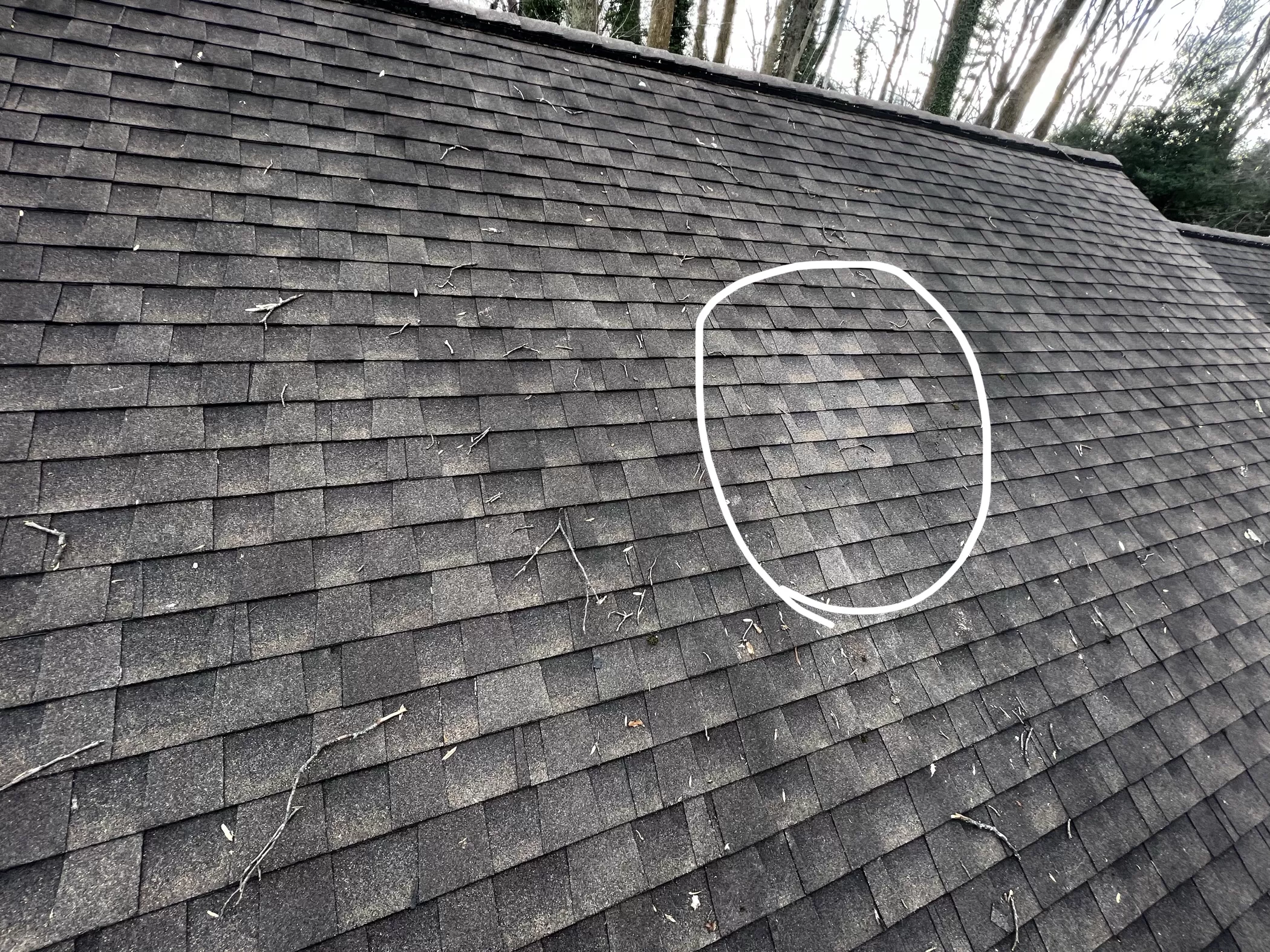
Quick answer: document the damage with photos before anything gets moved or repaired, get the roof protected from further damage, and when you contact your insurance provider, describe what happened and when — “shingles blown off in the June 14 storm” — not vague phrases like “the roof is old” or “wear and tear,” which describe excluded damage even when a storm did the work. We’re roofers, not lawyers or public adjusters, so treat this as field experience from hundreds of Maryland storm claims — not legal or insurance advice. Your policy and your carrier control the outcome.
Maryland gets its roof damage in bursts — derechos, nor’easters, hail cells that track across Anne Arundel and Howard counties in twenty violent minutes. After every one of them, we watch two nearly identical houses on the same street get two different claim outcomes, and the difference is usually paperwork and phrasing, not the roof. So here’s our guide to filing a roof damage claim — the same honest walkthrough of the roof insurance claim process we give homeowners at the kitchen table.
First, know what homeowners insurance covers — and what it doesn’t
Homeowners insurance usually covers sudden, accidental roof damage caused by a specific event: policies cover roof damage from a storm — wind and hail damage, falling trees and limbs — and cover damage caused indoors when rain follows the opening (the classic ceiling-stain water damage). Damage from wind is a covered peril on nearly every Maryland policy; deterioration never is. Your home insurance policy may cover a roof leak when a covered event caused it, and the policy may help cover the cost of emergency tarping and temporary repairs too. What a home insurance policy will not cover: gradual deterioration, neglected maintenance, and plain old age. Insurance companies often deny claims where the causes of damage look like wear rather than weather — which is why the difference between “the roof is damaged from the June storm” and “the roof wore out” decides real money.
Insurance coverage details vary by carrier, and nothing here is a promise about your roof coverage. But the outline is consistent: when a storm damages your roof, insurance often covers it; when time does, insurance likely won’t. The types of roof damage carriers pay for are sudden ones — so roof damage insurance claims come down to evidence that a sudden event happened. Homeowners filing roof damage claims with that evidence in hand start from strength.
Step 1: Document everything before you touch anything
The single biggest mistake we see isn’t a wrong phrase — it’s cleaning up first. A homeowner drags the fallen branch off the roof, picks shingles out of the yard, throws away the wet ceiling tile — and then tries to file a claim for damage to your roof that no one can see anymore.
Before anyone touches the roof or the yard:
- Photograph from the ground, wide and close. Every side of the house, the yard debris, shingles or granules in the gutters and downspouts, dented gutters or vents, and any neighbors’ visible damage (it corroborates the storm). You’ll want to include photos of your roof from every angle you can safely get.
- Photograph the inside. Water stains, drips, wet insulation in the attic, damaged ceilings — with a timestamp if your phone allows it.
- Write down the storm date. Note the date and rough time of the storm event. Wind and hail reports are public record, and your storm damage claim will be checked against them.
- Keep every receipt. Tarping, emergency roof repair, a hotel night if a room is unlivable — reasonable costs to prevent further damage are commonly reimbursable. Save them all.
Do not get on the roof. A storm-damaged roof is the most dangerous roof there is — loose shingles, hidden soft decking, wet surfaces. Ground photos plus a professional roof inspection cover everything a claim needs.
Step 2: Get the roof protected — before the weather comes back
Almost every homeowners insurance policy requires you to take reasonable steps to prevent further damage after a loss — this is called mitigation, and skipping it can shrink the claim. If water is coming in, the sequence that protects both your house and your claim is: document first, then tarp.
This is exactly what our same-day emergency roof repair service exists for: we photograph the damage as we find it, tarp the opening properly, and give you dated documentation and an invoice — all of which goes straight into your claim file. If the damage is contained and small, a standard roof repair visit may be all the mitigation the roof needs.
Step 3: Get a roofer’s inspection before (or alongside) the adjuster’s
You don’t have to wait for the insurance adjuster to know what you’re dealing with. A reputable local roofing contractor can inspect the roof, photograph the storm damage from on top, take roof measurements for the estimate, and give you a written scope of what’s storm-related versus what’s simply an aging roof. That written assessment tells you whether your roof qualifies as storm-damaged before anything goes on your record — and it will support your claim when the carrier’s adjuster makes the same storm-versus-wear distinction later.
Two honest warnings from inside the trade:
- Storm chasers follow Maryland hail maps. After a big event, out-of-state crews canvass neighborhoods promising a “free roof.” Some are legitimate; many disappear before the warranty matters. Check the MHIC license of anyone who knocks (ours is #85703).
- Never let anyone “help” the damage along. If a contractor suggests making the damage look worse, that’s insurance fraud — a crime, and one that lands on the homeowner too. We walk away from those jobs, and you should walk away from those contractors.
Step 4: Contact your insurance company — and say it accurately
When you contact your insurance provider to file a roof insurance claim, the first phone call sets the frame for everything after. You’re not being interrogated, but the insurance representative types what you say into the file, and imprecise words follow the claim around. Accuracy is the goal — not spin in either direction. These are the phrasing mistakes to avoid when filing a roof claim:
Knowing what the adjuster is looking for helps, so this is what hail and wind damage actually looks like on a roof.
| Instead of saying… | Say (if it’s true)… | Why it matters |
|---|---|---|
| “The roof is leaking, it’s pretty old.” | “The storm on June 14 blew shingles off and now the roof is leaking.” | Age isn’t a covered peril; a windstorm is. Lead with the event, not the roof’s birthday. |
| “It’s probably just wear and tear.” | “There was no leak before the storm; the damage appeared after it.” | “Wear and tear” is the literal exclusion language in most policies. Don’t hand the file a phrase that describes an excluded cause. |
| “It’s been leaking for a while.” | “I first noticed water on [date], after the storm.” | Long-standing leaks raise late-reporting and neglect questions. Give real dates, not vague ones. |
| “I don’t know what happened.” | “I have photos and a roofer’s inspection report — hail damage to the south slope.” | You’re allowed to rely on documentation. Guessing out loud creates a record of guesses. |
| “The whole roof is destroyed!” | “Here’s the documented damage; the inspection found X.” | Overstating damage hurts credibility — and misrepresenting a claim in either direction can void it. |
Practical notes for the call itself: you’ll be given a claim number — write it down and put it on everything you send afterward. If you’re not sure what your policy actually says before you file, contact your insurance agent first and ask about your deductible and your wind/hail terms; that conversation doesn’t open a claim. And keep your own log of every call — date, name, what was said. Insurance companies handle thousands of storm files at once; the homeowner with organized records is the one whose file moves.
To be crystal clear about the flip side: never misrepresent anything to your insurance company. If the roof genuinely was leaking before the storm, say so — an experienced adjuster will usually figure it out anyway, and honesty protects the parts of the claim that are legitimate. The point of careful phrasing isn’t to disguise wear and tear as storm damage; it’s to stop a homeowner from accidentally describing real storm damage as wear and tear.
Step 5: The adjuster inspection — have your roofer there
The insurance company will send an adjuster to inspect the roof damage and decide what the insurance company will pay. Adjusters are professionals doing a job, not enemies — but they inspect dozens of roofs a week, and it’s completely reasonable to have your roofing contractor on site for the adjuster meeting. We do this constantly across Anne Arundel, Howard, and Montgomery counties: the roofer is there to point out damage the ladder-and-drone pass might miss (creased shingles that haven’t blown off yet, hail bruising that only shows up close), compare roof measurements, and put the two scopes side by side on the spot.
If the claim is approved, the insurer issues an estimate and payment for the roof repair or replacement, usually minus your deductible — and in Maryland it’s illegal for a contractor to offer to “cover” or rebate that deductible, so treat that offer as a red flag, not a discount. If the numbers look off, you can ask the carrier to review the scope with your contractor’s estimate in hand. If a claim is denied and you believe it’s wrong, you have options — a re-inspection, an appraisal process on many policies, the Maryland Insurance Administration’s consumer complaint process, or a licensed public adjuster. Details vary by policy and carrier; that’s the point where “ask your carrier, and get advice beyond your roofer” is the only honest guidance.
What roof damage actually costs — and when you need to file
Not every storm scuff justifies a claim. Homeowners insurance policies carry deductibles — commonly $1,000–$2,500, and some Maryland policies now use percentage deductibles for wind and hail that can run higher — and a claim history follows the house. The honest math on the cost of roof work versus a claim:
- Minor damage below or near your deductible — a few shingles, a small flashing fix — is usually better paid out of pocket. Most of our repair invoices land well under typical deductibles, whether or not the damage would technically be covered by insurance.
- Real storm damage across a slope or the entire roof is where insurance genuinely helps cover the cost. A full roof replacement on a typical Maryland home runs $9,000–$25,000 in the market we work in — our Maryland roof replacement cost guide breaks those ranges down — and that’s not a check most families should write out of pocket when a covered peril caused the damage. Whether your policy pays replacement cost or depreciated actual cash value changes the check dramatically, so read that line of your policy.
- Gray-zone damage deserves an inspection first. If you decide you don’t need to file, you’ve spent nothing; if you do, you file with evidence.
One more thing carriers quietly reward: maintaining your roof. A roof in good condition before the storm — documented professional roof installation, repairs done promptly, someone up there to check your roof after major weather — is much harder to deny for “neglect” than one with five years of deferred problems. Maintenance records are claim evidence too.
Frequently asked questions
Should I call a roofer or my insurance company first?
If the roof is actively leaking, call a roofer first — your policy expects you to prevent further damage, and a documented emergency tarp strengthens the claim rather than hurting it. If the damage isn’t urgent, either order works; many homeowners get a roof inspection before filing a roof claim so they know what they’re claiming.
What should I not say to my insurance adjuster about roof damage?
Don’t guess, and don’t volunteer characterizations like “wear and tear,” “it’s an old roof,” or “it’s been leaking forever” — those phrases describe excluded causes, and they’ll be taken at face value even if a storm caused the actual damage. Stick to facts: the storm date, when you first saw damage, and what your photos and inspection report show. And never exaggerate — misrepresentation cuts both ways.
Does a roof insurance claim raise my premiums?
It can — claims history is one factor in pricing, though a single claim for weather damage affects different insurance companies differently, and after a widespread storm event rates often move region-wide regardless of who filed. Ask your agent how your carrier treats weather-related roof damage claims; that answer varies too much for anyone to promise.
How long do I have to file a storm damage claim in Maryland?
Policies require “prompt” notice, and many set specific windows for storm claims — commonly one year, but it varies by policy and carrier. Practically: follow the steps to file a roof claim as soon as you know you have damage. Waiting months invites arguments about what the storm did versus what happened afterward.
Will insurance pay for a whole new roof or just a repair?
It depends on the extent of the damage, your policy type, and matching rules. Adjusters commonly approve money to repair the roof when damage is isolated, and pay to replace your roof when damage is widespread or discontinued shingles can’t be reasonably matched. Whether your policy pays replacement cost value or actual cash value (depreciated) makes a bigger dollar difference than most homeowners expect — check your declarations page.
Does homeowners insurance cover roof leaks?
Policies generally cover roof leaks caused by a sudden covered event — a storm opens the roof, water gets in — along with the interior damage that follows. They generally don’t cover leaks from age or deferred maintenance, and every policy differs, so confirm your own coverage with your carrier. This is exactly why first-hour photos and a storm date matter so much.
Storm damage in Maryland? Start with documentation, not panic
If a storm just hit your roof, the order is simple: photos, protection, inspection — then call your insurance company with dates and facts. We handle same-day emergency tarping and honest storm inspections across Anne Arundel, Howard, Montgomery, Frederick, and Baltimore counties, and we’ll tell you straight if the damage doesn’t justify a claim. Family-owned, GAF Certified, MHIC #85703. Call (443) 233-1119.

Talk to a Maryland roofer who tells it straight
Free inspection, photos of what we actually find, and an honest written estimate — whether the answer is a $600 repair or a new roof.



No comment yet, add your voice below!